Kids' Gear Buy-and-Sell Cycle for Each Growth Stage
Sell kids' gear at each growth stage to fund what comes next.
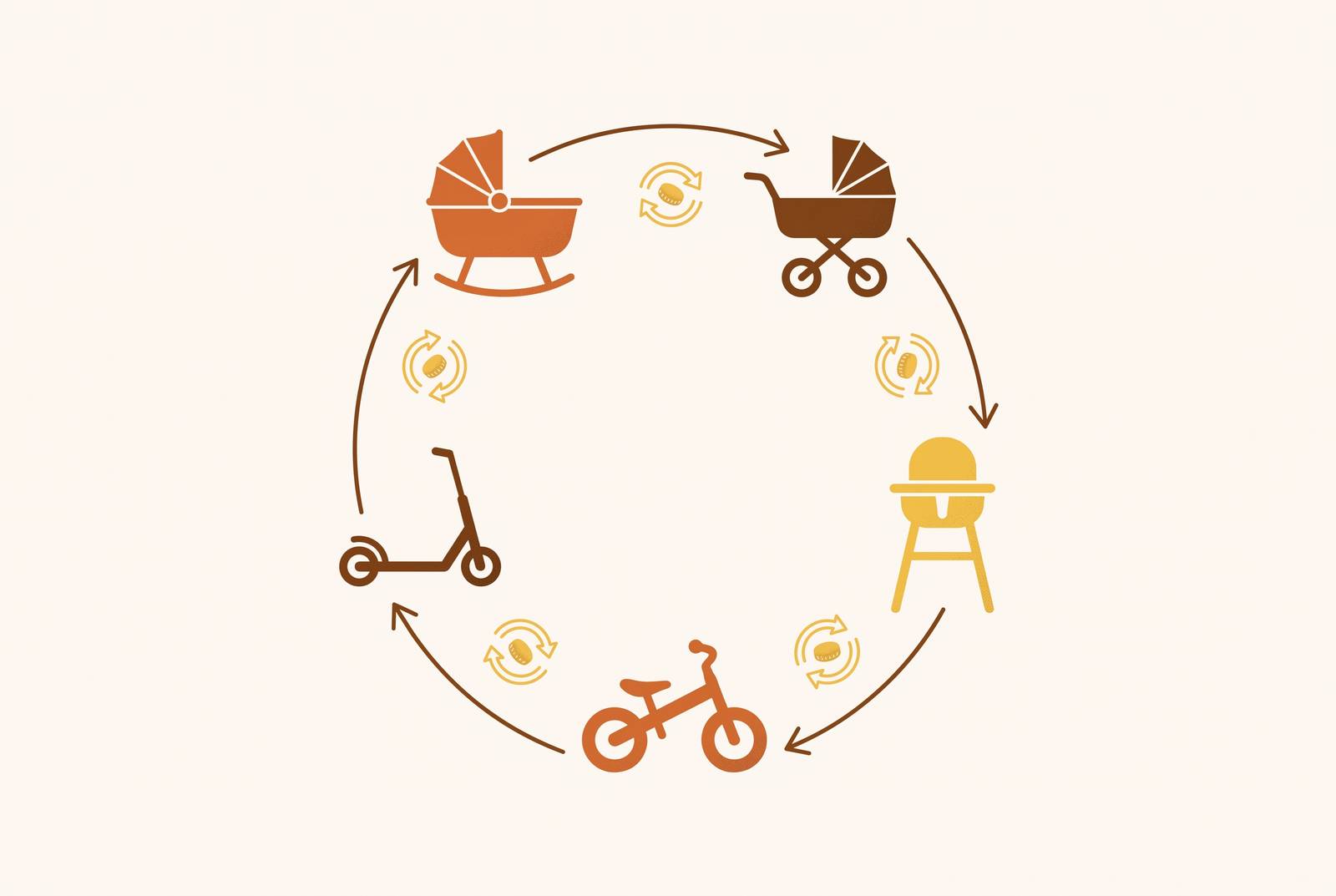
Kids’ gear has a buy-and-sell cycle at every growth stage, and the cheapest way through it is to plan the exit before the purchase. Buy durable items secondhand, sell when their job ends, and use the proceeds for what comes next. From infant bouncers to tween instruments, the aim is to keep money moving rather than give it a permanent address in the garage.
Why kids' gear creates a natural buy-sell cycle at every stage
Children make perfectly good equipment obsolete simply by developing. A bouncer can have plenty of life left when its owner moves on to other business. Most U.S. parents now rely on secondhand products for family needs, and secondhand baby gear is a multi-billion-dollar, fast-growing market. There are buyers because families reach the same transitions at different times.
Those transitions also make the cycle predictable. Each stage has its own high-value items and its own sell trigger, whether that is a new clothing size, a developmental milestone, or an abandoned activity. Buying used at entry and selling at exit turns gear into a short-term asset. A plan for each stage lets the money from old gear help pay for what comes next.
How to think about resale value before you buy anything new
Resale value belongs in the purchase decision. Durable brands with established secondhand demand give you a better chance of recovering money. Lovevery toy kits have strong demand when children outgrow them. Premium clothing brands including Tea Collection, Hanna Andersson, Mini Boden, Janie and Jack, and Patagonia Kids retain meaningful secondhand value that mass-market clothing does not. Buying those items used saves money up front and leaves the chance to sell them when they are outgrown.
Price that exit from completed sales. Search the exact model on eBay and filter to “Sold items” to see what buyers actually paid. Facebook Marketplace does not show sold prices the same way, so eBay is a useful free guide to what to charge. An active listing tells you what someone hopes to receive, which is not quite the same financial instrument.
Condition then sets the range. Good, lightly worn, fully working gear can recover roughly a third to half of retail, while rough items or parts-only pieces recover a small fraction at best. Add a negotiation buffer because buyers will offer less. Keep tags intact where possible on unworn clothing, since new-with-tags pieces sell for meaningfully more than identical items without tags. Finally, sell when the stage ends, before newer versions turn delay into depreciation.
Infant stage (0–12 months): the highest-velocity gear turnover in a child's life
Infancy is the fastest version of this cycle because useful windows often last weeks or months. Clothing can be outgrown after fewer than a handful of wears, leaving plenty of quality for the next family. Secondhand outfits and hand-me-downs therefore make a strong starting point. Play mats, infant gyms, and tummy-time gear also offer good used value because their working lives with one baby are short.
Bouncers, infant rockers, and infant loungers such as the Dockatot Infant Lounger have similarly brief windows and strong resale when their condition is maintained. The Keekaroo Peanut Changer has a documented 60% resale value, making it a clear example of the buy-used, sell-used approach. Quality strollers are another large purchase with strong recovery potential, while Lovevery and premium clothing outperform mass-market alternatives. Car seats are safety-critical, so buyers and sellers should verify their history.
The sell trigger here is usually growth or development. List clothing as soon as the baby sizes out, including anything kept “just in case. Bundle it by size bracket because buyers usually need the next wardrobe. Sell loungers, bouncers, and play mats as soon as the baby stops using them. Waiting gives new versions time to arrive and older models time to lose value.
Toddler stage (1–3 years): large gear exits, active-play gear enters
The toddler transition is a coordinated swap rather than two unrelated shopping jobs. When nursery gear is no longer needed, activity tables, ride-ons, and climbing structures take its place. Make that swap in one weekend, using sales of the old gear to help pay for the new gear and make room for it. Strollers can deliver some of the largest proceeds when they are no longer needed. A non-converting crib reaches its natural sale point at the move to a toddler bed, while high chairs and infant play gyms leave as their roles end.
Infant bouncers, loungers, and swings also belong in the outgoing group once their stage is complete. Infant Lovevery kits made for each age should be listed when the child becomes a toddler. On the buying side, activity tables, ride-on cars, push walkers, slides, and climbers are widely available secondhand and often lightly used. Buy the appropriate toddler Lovevery box used. For bulky play gear, local pickup through Facebook Marketplace means there is no shipping to arrange and no fee for the local sale.
Clothing still turns over quickly, so used lots remain useful on both sides of the swap. However, toddlers put more wear into their clothes than infants do. Check knees, hems, and zippers before buying a bundle, since some pieces may have more wear than others. Then sell outgrown clothes in size lots, which remain the fastest-moving format on local marketplaces.
Preschool stage (3–5 years): the dress-up, creative play, and outdoor gear window
Preschool gear stays useful longer. Items get more use and reach the end of the stage in more varied condition. Costumes, creative kits, and outdoor toys slowly pile up, with fewer of the clear signs that it is time to sell infant gear. Clearing this stage therefore takes a deliberate sweep. Check both whether something fits and whether the child has moved past it.
Start with toddler ride-ons and climbers that are no longer used, selling before weather or storage degrades them. Early Lovevery and KiwiCo kits also belong in that sweep because these developmental brands support strong resale. Dress-up costumes and imaginative play sets need closer condition grading. Photograph them in detail and disclose wear rather than pricing every set as though it spent its career behind glass.
For incoming gear, balance bikes, bikes with training wheels, and scooters are widely available used and easy to inspect locally. Art supplies, creative play kits, and building sets also fit the secondhand approach, although used building sets should be checked for completeness. Preschool clothing in 3T–5T gets more wear, so check it closely even when buying premium brands. Children still grow so fast that they rarely get full use out of clothes that cost more. Sell ordinary clothing in size lots, reserving separate listings and shipping for premium pieces worth the extra work.
School-age stage (6–12 years): electronics, sports gear, and the collectibles trap
School-age equipment costs more per item, and its value depends more on the category. A tablet does not age like a bike, and a collectible does not sell like either. Kid-targeted tablets, handheld gaming devices, and educational electronics depreciate quickly, with each product generation accelerating the loss. Sell as soon as use stops because waiting a year can turn a viable sale into a near-worthless listing. Use exact model numbers in eBay sold searches, particularly for electronics, where prices vary sharply by generation and battery-dependent brands sit toward the lower end of the resale range.
Sports gear follows a more predictable size cycle. Buy used bikes, skates, and team sports equipment when a child reaches each new size bracket, then sell what they have outgrown before the season ends. Spring and back-to-school are especially useful selling windows because buyer demand is stronger. Helmets, like car seats, need safety checks beyond those for ordinary used gear.
Collectibles require a harder rule because their resale value splits sharply. Sought-after sets and characters in complete, excellent condition can command strong prices, while common, incomplete, or damaged sets can be nearly impossible to sell. Storing them for a hoped-for windfall is usually a value-destruction decision. Most accumulate without gaining value. If a child has stopped playing with a complete set in good condition, list it now rather than appointing the cupboard as its investment manager.
Clothing still has a broad secondhand audience, with children aged five to ten forming the largest age group in kids’ apparel demand. Social pressure also grows, and a majority of parents worry about children being judged for reused clothing or school supplies. Premium brands such as Patagonia Kids offer a practical compromise. They provide recognizable quality while retaining value for the next sale.
Tween stage (10–12 years): the gear cycle slows, but the stakes per item rise
By tweenhood, the constant flow of small lots slows and individual purchases matter more. One well-timed sale can now deserve more attention than a bundle of outgrown basics. Gaming consoles and accessories still follow the electronics depreciation curve, so an unused device is not getting more valuable while everyone avoids listing it. Well-maintained musical instruments can hold strong resale value. Instruments from lessons a child has quit should be sold promptly rather than stored as monuments to a brief musical era.
Sport-specific equipment including cleats, rackets, protective equipment, and bags also keeps the rotation going. These pieces may be bought for one season and outgrown by the next, making local peer-to-peer resale useful. Instruments, sports gear, and tech accessories have substantial secondhand supply, often in good condition because previous owners outgrew them. What children want plays a growing part in what gets bought, so used premium brands can give them what they want and help parents get money back at resale.
The selling route now depends more on the individual item. Shippable clothing, accessories, instruments, and small electronics can reach national buyers through eBay or category-appropriate platforms, while furniture and large sporting equipment suit fee-free local pickup on Facebook Marketplace. The cycle has not ended, but matured. Managed across childhood, it recovers part of the purchase costs at each transition.
Where to sell each type of gear and how to list it so it actually moves
Execution is what separates recoverable value from money actually recovered. Use Facebook Marketplace for bulky strollers, climbers, furniture, and large ride-ons, where shipping would complicate the sale. Use eBay for branded gear, electronics, collectibles, and premium clothing that can be shipped and have buyers beyond the local area. Bundle ordinary clothing by size and season to sell it quickly nearby, and list valuable premium pieces on their own.
A useful listing makes the item easy to find and its condition easy to judge. On eBay, use the full title allowance for the brand, model, item type, key attribute, size or color, and condition keyword. Photograph against a neutral background and include close-ups of wear, labels, and electronics model or serial numbers. Cover condition, measurements, functionality, flaws, and included accessories in a description that is easy to skim. Disclose damage early because a surprised buyer can leave feedback that costs more than an honest lower price.
That work is also where good intentions stall. Photographing, researching, writing, and posting across platforms can make storage seem easier than selling. AI-assisted listing tools help with this work by spotting what is in photos, grading its condition, writing the listing, and posting it to more than one marketplace. The value is less time spent administering the sale.
Keep transaction precautions equally practical. On eBay, report and ignore requests to communicate off-platform, pay through Zelle, Venmo, or PayPal Friends and Family, or accommodate a supposedly broken account. On Facebook Marketplace, check that buyers will follow through before holding items for them, and favor cash when they pick up. Photograph serial numbers and unique identifiers before shipping electronics or high-value gear, and video-record packing high-value items. A clear listing and a straightforward handoff finish the rotation, putting the proceeds back to work at the next stage.