Selling Sports and Hobby Gear After Quitting a Sport
Price against sold comps and choose the channel that matches each item's value.
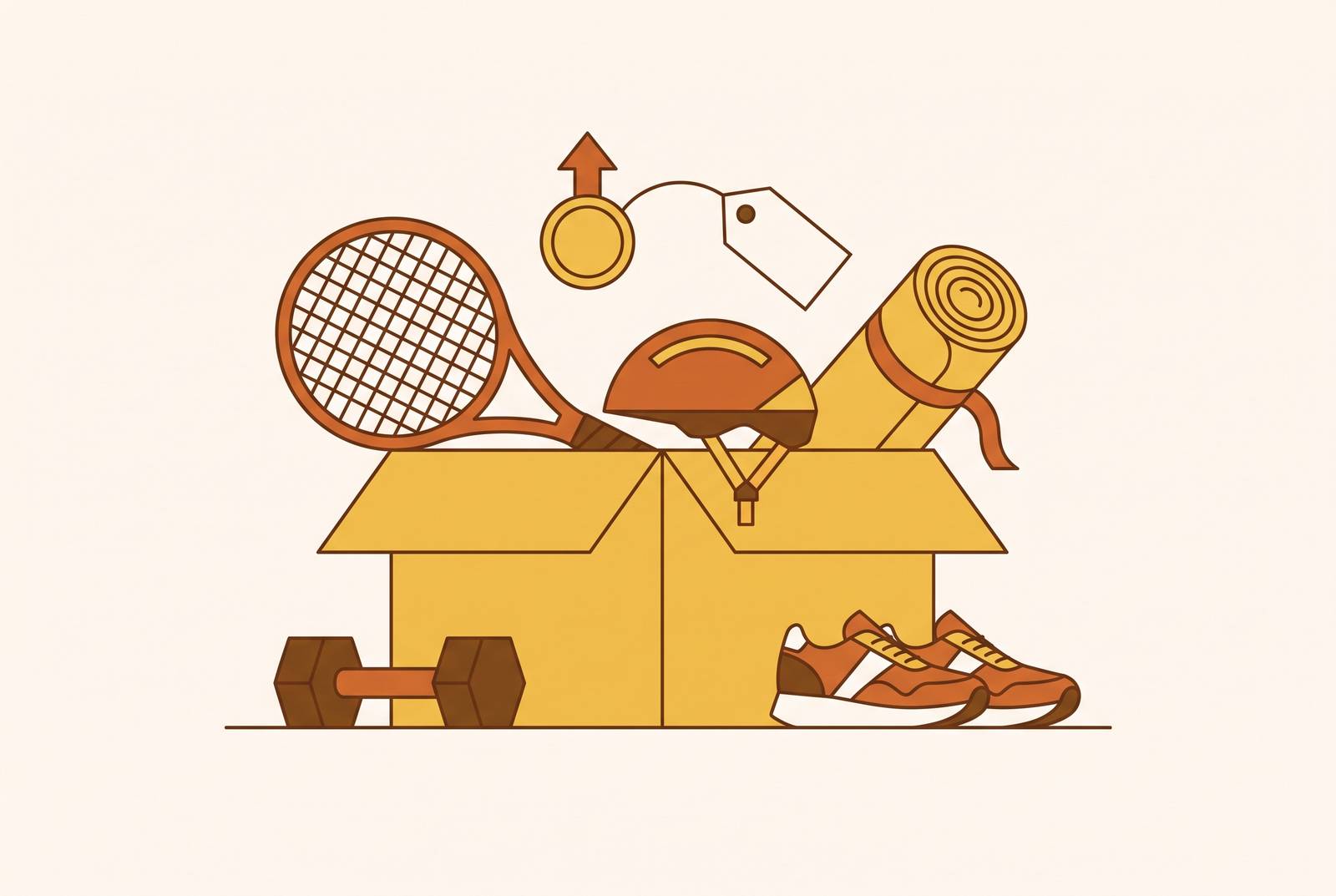
Selling sports and hobby gear after quitting is a pricing and routing problem. The way to recover meaningful cash is to price against completed sales, match each item to the right selling channel, and skip individual listings that cost more time than they are worth. Your abandoned hobby needs a sensible exit price.
Why quitting a sport leaves you with an asset, not just clutter
A change in your interests does not erase the usefulness of the equipment. Gear that still works can be worth real money, even when its main job lately has been blocking a cupboard. The market for used sporting goods and fitness gear is big and growing, as buyers look to save money and more people shop secondhand. The demand is there, but it does not make every item equally easy to sell.
Sellers often expect more than buyers will pay. Anchor to the wrong price and the item sits, while choosing the wrong channel can mean accepting less than the market would support. These are separate decisions that need to work together. A searchable golf club and a heavy weight set may both be valuable, but they do not need the same route to a buyer.
How to find what your gear actually sold for — not what sellers are asking
An active listing tells you what someone wants, while a completed sale tells you what someone paid. That distinction matters more than the confidence of the seller or the quality of their photographs. An ambitious asking price can sit online doing nothing for a long time. Use completed sales as your anchor instead, so another seller’s optimism does not become your storage problem.
On eBay, search for the brand and model of your item. On desktop, find “Show only” in the left sidebar and select “Sold Items”. On mobile, open the Filter menu and select “Sold Items”. Then compare completed sales for the same model in a similar condition. Facebook Marketplace does not show sold prices in the same way, so check eBay sold comps before using local asking prices as a guide.
Gear that has barely been used and still has its original box or tags belongs near the high end, while gear that has had light use and works fully fits the middle. Gear that works but shows wear belongs toward the lower end, and as-is or parts-only items should be priced well below working comps. The time of year matters too, because buyers are keener to buy ski gear in November than in April. Factor seasonal changes in demand and price into the decision about when to list.
Which categories hold value and which flood the market
A home gym hobbyist with a residential fitness machine is not in the same position as someone clearing a fitness center. In general, strength and precision equipment tend to keep more of their value than cardio machines and mass-market fitness products. Use that divide to triage the haul, then let the sold comps settle the price of each model.
Cast iron and steel plate sets, commercial dumbbells, and kettlebells depreciate minimally because they can function identically after years of use. They have no console to become obsolete and no electronics to fail. Iron is refreshingly uninterested in software updates. Commercial power racks from recognized brands also retain a meaningful share of their original retail value when they are in working condition.
Treadmills, ellipticals, and stationary bikes have more working against them. Wear components and aging console electronics make them less durable resale propositions than free weights. They also have to sell alongside lots of other gear bought when people felt a sudden urge to get fit. Residential machines without a recognized brand or with discontinued parts are among the hardest items to sell privately, and some are not worth listing.
What gear for each sport is worth depends a lot on its brand and model. Premium golf clubs, well-kept tennis and pickleball racquets, and high-end baseball bats keep their value when buyers know what they are looking for. Bulk jerseys, generic cleats, and pads move more slowly and at lower margins unless bundled. Skis, snowboards, and hockey gear sell a lot in season, so expect less when fewer buyers want them outside peak months.
Protective gear needs to be checked for safety before it gets a price. Check what the manufacturer says about service life and impact history for helmets and certified protective equipment. The CPSC advises replacing helmets after a crash and following manufacturer instructions. A helmet that has taken a significant impact should be excluded from resale at any price. Disclose impact history honestly for protective gear, because buyers rely on that information in ways that buyers of a dumbbell do not.
Matching gear to the right selling channel
Start with the cost and practicality of moving the item. Exercise machines, weight sets, and racks belong on Facebook Marketplace when shipping would eat up what they sell for. Local pickup removes that shipping problem, and an in-person cash sale has no seller fees. Negotiation is expected, so leave room to come down without dropping below your floor. That floor should come from the sold data.
For shippable items that buyers search for by brand and model, eBay offers a national buyer pool. Golf clubs, tennis racquets, baseball bats, and skates fit this route. eBay’s seller fee structure reduces the amount you keep from the sale price, so your minimum acceptable price needs to account for it.
SidelineSwap is another route for sport-specific equipment, including hockey, baseball, lacrosse, golf, skiing, and snowboarding gear. Its buyers are actively shopping for sports equipment, which reduces the amount of explanation a seller needs to provide. When an item sells, a prepaid shipping label handles that part of the process. Buyer protection and message-based seller communication are built in, and payouts can go to a bank account, Venmo, or a retailer gift card.
Play It Again Sports buys used gear in person without an appointment for a quick sale. It pays cash or a check on the spot, depending on the amount, or offers store credit with a 10–20% bonus over cash value when trading toward in-store product. Its buying categories include fitness equipment, golf, hockey, racquet sports, and snow sports, with offers based on brand, condition, and current demand. Expect less than the ceiling of a private sale, and better offers during or just before the item’s active season. It does not buy mass-market residential fitness brands without recognized resale demand.
For commercial gym equipment at scale, a refurbished outlet or trade-in can remove weeks of inquiries and pickups. The payout is lower than a private sale, but the saved time and simpler logistics may justify the difference. Outlets will not buy heavily damaged machines, equipment with discontinued parts, or most residential brands.
How to prepare gear so it sells faster and for more
Gear that is clean, has good photos, and is described honestly sells faster and closer to its comp price than gear that looks uncared for. Buyers can tell when a seller cares about the sale and when one simply wants an object to disappear. Dust is not provenance.
Clean and sanitize contact points, including padding, grips, handles, and straps, before taking photographs. Use mild soap and water for most synthetic fabrics, and leather cleaner and conditioner for leather items. For high-contact pads and gloves, use disinfectants that work with the material and follow the manufacturer’s care instructions. Tighten screws, replace worn laces, and secure loose fittings where needed. These small repairs cost little and improve the condition buyers can see.
Photograph against a plain background in natural or well-diffused light. Show the full item from the front and back, then capture wear, damage, brand and model labels, serial numbers, and size tags. For protective gear, include the certification label. Use the photographs to answer questions about condition so buyers do not have to ask for views that are missing. More photographs are useful only while they add information.
Lead the title with the brand and model, so “Callaway Rogue ST Driver” does more work than “Golf Club”. Describe the actual condition, using “working condition with normal wear” or “perfect” only when accurate. Include the purchase year or approximate age, known hours of use, what comes with it, dimensions for bulky items, and defects with corresponding photographs. AI-assisted listing tools can write a draft from a photo, but the listing still needs those details. State payment and pickup preferences clearly, and avoid “DM for details” on higher-value items because it creates needless conversations and more openings for scam approaches.
What to do with gear that isn't worth listing individually
Not every item deserves its own title, photo session, and appointment with a stranger. The decision is whether the likely return justifies the work of selling it alone. Low-value items can still have value as a bundle, particularly when they serve the same sport or hobby. Group golf accessories, a full youth baseball kit, or a collection of resistance bands into a single lot. Buyers get several things they need without sourcing each separately.
Price that bundle below the sum of the individual sold comps. The discount is the reason to buy the lot, while fewer transactions are the benefit to you. This is not the place to squeeze the highest possible return out of every piece. A bundle that moves is more useful than several tiny listings that become a second hobby, this time in appointment scheduling.
For gear with no realistic buyer, donation can be a better choice than managing a listing. That can include unbranded residential fitness machines, equipment with discontinued parts, or items with obvious wear. Responding to low offers and arranging pickups for something worth only a few dollars may cost more time than the return justifies. Safety-compromised protective gear is different, because donation is also inappropriate for impacted helmets or structurally cracked equipment. Discard those items, and do not let the difficult leftovers delay selling the equipment that can bring a worthwhile return.
Avoiding the scams that target private gear sellers
High-value private sales attract payment and pickup scams, so watch the mechanics of the conversation. A buyer who immediately accepts the asking price and focuses only on payment or collection rather than the equipment is a reason to pause and check further. The decisive check comes before you release the item. A screenshot or forwarded email saying payment is confirmed is not confirmation. Verify the funds in your own app or account.
An overpayment followed by a refund request is a more specific warning. The original check or transfer can reverse after you have sent the supposed excess back, leaving the refund gone. Never agree to pay with gift cards, wire transfers, or cryptocurrency. Those payment methods do not give you a practical way to reverse the transaction.
Keep your messages in Facebook Messenger or the selling platform’s own messaging channel. Moving elsewhere removes the conversation from the platform’s monitoring and dispute process. Keeping the chat on the platform leaves a record, but some ways of paying still have no protection. Facebook’s purchase protection covers only sales that meet its rules and go through its checkout system. Cash and peer-to-peer transfers outside that system have no platform-backed recourse.
For local exchanges, meet in a well-lit public place and exchange payment and the item at the same time. A bank lobby or police station parking lot is a known safe place to meet when selling items worth a lot of money. Cash remains the cleanest payment method for an in-person sale because it clears instantly and cannot be reversed.