Selling Everything Before a Long-Term Move Abroad
Price from what items actually sold for, not what you think they're worth.

A long-term move abroad turns your entire household into a math problem with a due date. Every object you own gets sorted into one of two piles: sell it before the plane leaves, or lose it. The deadline doesn't bend, either. Whatever hasn't sold by departure day becomes a donation or a curbside item by default, and that's money walking out the door on its own schedule.
Scale makes it worse. Moving abroad adds its own wrinkles on top of the time crunch. Customs rules differ by country, and some countries flatly ban certain imports. Bulky items like mattresses and desks usually cost more to ship than to just buy new at the destination.
Demand for secondhand goods is actually working in your favor. Tariffs on new consumer goods have pushed buyers toward the used market, so demand for secondhand items has gone up right when you need it to. eBay closed out 2025 with 135 million active buyers who together spent $79.6 billion on the platform. Every one of those transactions is a real price point, a record of what someone actually paid for something, and that data is the foundation for everything in this guide.
Why sellers leave money behind before listing
The most common pricing mistake sellers make has nothing to do with math. Only the receipt tells you what a buyer will actually hand over cash for, and sellers racing a departure date tend to skip the step of checking receipts because they feel too rushed to bother.
The reason people overprice their own stuff isn't laziness but a documented psychological pattern called the endowment effect, which economists Daniel Kahneman, Jack Knetsch, and Richard Thaler laid out in their paper "Anomalies: The Endowment Effect, Loss Aversion, and Status Quo Bias," published in the Journal of Economic Perspectives. In one version of their experiment using a plain coffee mug, owners wanted a median of $7.12 to give it up, while people without the mug were only willing to pay a median of $2.87 for it. Two very different numbers, depending on which side of the counter you're standing on.
Owning something quietly inflates how much you think it's worth, which explains why pricing from memory or from a gut feeling almost always runs high. Pulling your number from real sold data corrects for that bias before it ever reaches your listing. For someone running a full household selloff under a deadline, this problem multiplies fast. Every item carries a little bit of sentimental math attached to it, and every inflated price adds days of waiting that an expat on a clock simply doesn't have. The fix is a different source of information: look at what identical items have actually sold for, not what other sellers are hoping someone will pay.
Pricing every item from real sold data
Pricing off completed sales instead of active listings gives you a number buyers have already proven they'll pay, and it works on literally everything in your house, from a lamp to a dining set.
Once the sold listings are in front of you, look at the last five to ten sales and ignore the outliers. For items that don't sell often, like niche collectibles or seasonal goods, eBay's Product Research tool (formerly known as Terapeak) stretches that lookback window to three years of sales history. It's free inside Seller Hub for anyone with access to it, though on mobile you'll need at least one active listing, or to have bought or sold something in the last 90 days, to unlock it.
Facebook Marketplace doesn't show sold-price history the way eBay does, so the workaround is simple: search the same item on eBay, filter to sold listings, and use that number as your Marketplace starting point. One thing to account for on Marketplace specifically is that buyers negotiate more there, usually through the built-in "Make an offer" button, so pad your asking price slightly above your true minimum to leave room to haggle.
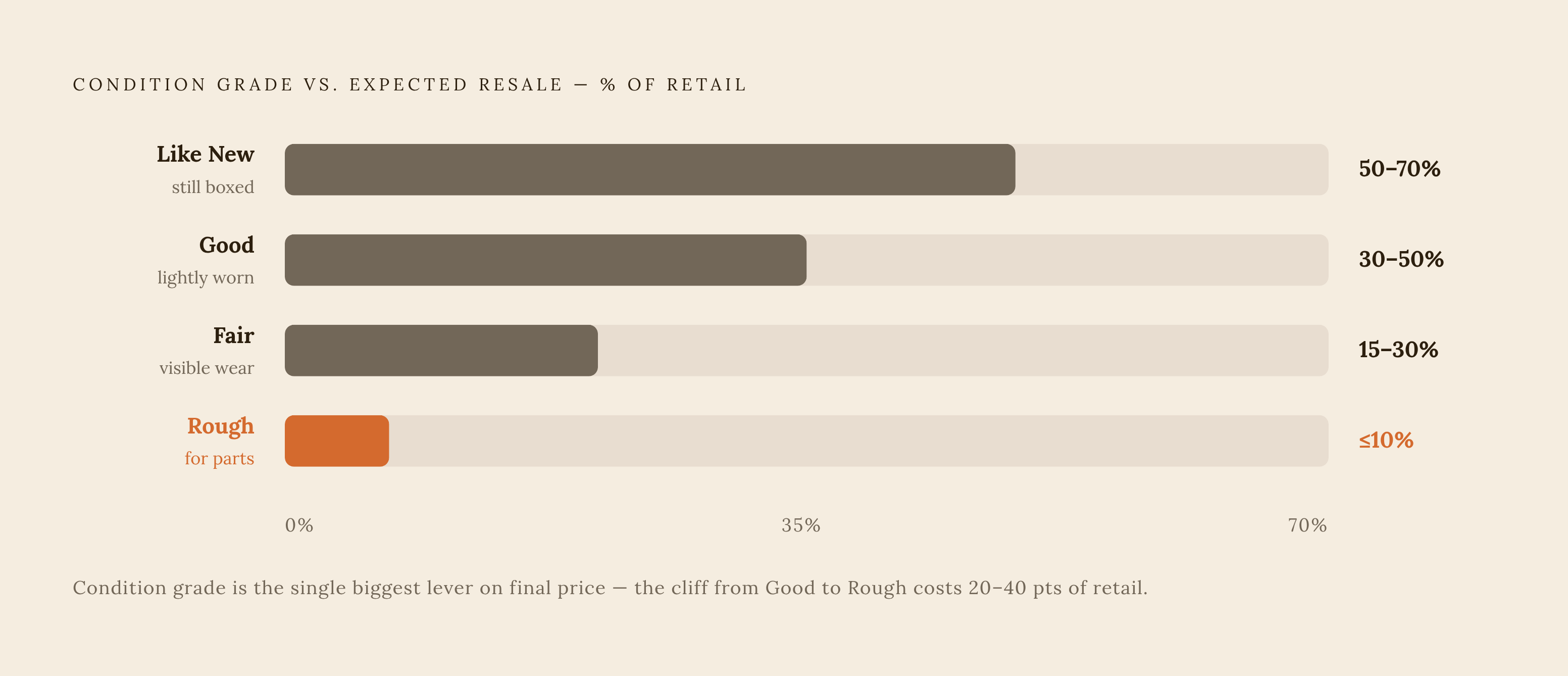
Condition does the rest of the work. Items that are like-new, barely used, and still have a box or tags typically sell for 50 to 70 percent of retail. Good condition items, lightly worn but fully working, run 30 to 50 percent. Fair condition items with visible wear but that still function sell for 15 to 30 percent. Anything rough or being sold for parts should go for 10 percent or less, priced to move fast.
There's a real tradeoff between speed and margin to understand before departure day sneaks up. For someone with a one-way plane ticket already booked, speed usually wins that argument. Tools exist now that automate the sold-comp lookup from a single photo, identifying the item, grading its condition, and pricing it from real-time eBay sold-listing data before a seller reviews and publishes the listing. That doesn't replace the manual method described above; it just saves the five or ten minutes per item that the manual version takes, which adds up fast across a whole house.
Sequencing a household selloff before departure
Selling the wrong things too early leaves you without basic essentials weeks before you fly out, while saving everything until the last minute means your best items end up donated in a panic instead of sold for real money, so sequencing makes or breaks a household selloff more than pricing does. The starting point, before a single listing goes up, is a simple four-box sort done room by room: keep what you use regularly, donate what's in good shape but not worth your listing time, sell what will justify the effort, and trash what's broken or expired. Doing this sort first, rather than figuring it out item by item while you're trying to write listings, keeps the whole process from turning into chaos.
Four to six weeks before departure is the time to tackle the big stuff and the easy wins together: closets, kitchens, storage areas, and any high-value item that might take a while to find the right buyer for, like a nice piece of furniture or a collectible. In the final week, sell off the last essentials you held back, like a few kitchen tools, a lamp, or a basic piece of furniture, and arrange one last giveaway for anything still sitting around.
For anything still unsold close to departure, a simple post, something like "house clearance, moving overseas, everything free, come take what you like," clears out the remainder fast and skips the hassle of coordinating multiple donation pickups.
Which items in a typical household are worth listing
Deciding what to list and what to donate comes down to a simple time-value question: will this sell fast enough, for enough money, to justify the minutes spent photographing and writing it up? Some categories answer yes reliably. Others almost never sell as individual items and end up costing more in wasted listing time than they'd ever bring in.
Electronics sell consistently. Old SNES, N64, and GameCube systems, even bare controllers, sell at prices collectors are happy to pay. Vintage audio equipment is its own quiet goldmine. Receivers and turntables from brands like Pioneer, Marantz, Sansui, and Kenwood see real demand on eBay, and a Marantz 2270 receiver can sell for several times what a thrift store would charge for the same unit, which makes this a category worth a little extra research before you price it.
LEGO and toys reward patience and brand recognition. Vintage action figures, Hot Wheels, and board games from the 1980s and 1990s attract collectors too, especially with original packaging intact, which bumps the value up noticeably. Branded clothing is worth listing; unbranded clothing almost never is. The resale value in used clothing lives almost entirely in the label: recognizable brands, vintage band shirts, good denim, and solid outerwear sell. Collectible kitchenware rounds out the list of surprise winners. Cast iron from Lodge, Le Creuset, and vintage Griswold holds its value even rusted, since buyers know it can be restored to working condition.
On the other side, most books aren't worth listing one at a time and should just go to donation in bulk. For those low-value kitchen and household odds and ends that aren't worth listing individually, bundling solves the problem. A can opener alone goes nowhere, but grouped with measuring cups, a corkscrew, and a few other tools into something like a "Set of Kitchen Essentials," it becomes a listing someone will actually buy. That same bundling logic applies across nearly every low-value category in the house.
Matching each item type to the right marketplace
Where an item sells best depends on what kind of item it is, not on loyalty to one platform over another. A full household selloff runs on eBay and Facebook Marketplace working at the same time, each one covering what it's naturally good at.
Facebook Marketplace wins for anything heavy, local, or something buyers want to look at in person first. Furniture priced right typically sells within 48 to 72 hours for local pickup, which makes it one of the fastest-moving categories on the entire platform.
eBay takes the lead for electronics, collectibles, branded clothing, vintage audio, and collectible kitchenware, mostly because its audience is global and its listing format supports exact model matching and transparent sold-price history. The platform with the lower fee isn't automatically the one that puts more money in your pocket.
A handful of specialty platforms round out the picture for specific categories, though they're supplementary rather than primary for a deadline-driven household selloff. Chairish handles higher-end furniture and décor. The practical approach for someone on a departure date is to run eBay and Facebook Marketplace at the same time rather than in sequence: get shippable, collectible, and branded items listed on eBay first, and list furniture and bulky items on Facebook Marketplace that same day. There's no reason to wait and see how one platform performs before trying the other.
Writing listings that sell quickly under a deadline
A listing that sells fast gives a buyer every piece of information needed to say yes, with nothing vague left over that invites lowball offers, stalling, or scam attempts. Title structure does a lot of this work on eBay specifically. A title like "Vintage 90s Carhartt Detroit Jacket Men's Large Brown Duck Canvas Work Coat USA" matches nearly every search term a real buyer would type in.
Photos work differently depending on where you're posting. Overly polished, studio-style photos can actually hurt trust there, since they start to look like stock images lifted from somewhere else. eBay buyers expect the opposite: clean, well-lit shots on a neutral background that show every angle and any flaws the item has.
The words in the listing matter just as much as the photos. Undisclosed problems are one of the most common reasons Marketplace deals fall apart or end in a dispute, so battery health, cracks, and missing parts all need to be stated before a buyer shows up expecting something different.
Bundling, covered earlier as a pricing strategy, also speeds up the writing process. A "Set of Kitchen Essentials" or a "Box of 1990s Board Games" is one listing instead of five or six, which means one buyer, one pickup, and usually a faster yes. Safety matters just as much as speed for in-person sales. Writing a good listing takes real time, usually somewhere between five and twenty minutes depending on how much detail it needs, and tools now exist that generate the title, description, condition grade, and price from a single photo, which matters a lot once that task gets multiplied across an entire household of items.
Managing the final two weeks: price drops, free giveaways, and leaving nothing behind
The final two weeks call for a mental shift from getting the best price to simply getting things gone, and knowing exactly when to make that switch separates sellers who walk away with cash from sellers who walk away with a pile of guilt-donations shoved into a stranger's car at the last minute. A well-priced listing that hasn't gotten a single serious inquiry after two or three days needs a price drop, not more patience. Stale listings perform worse in platform search algorithms, and every day a listing sits unsold is a day closer to a departure date that isn't moving.
Drop the price 10 to 15 percent after seven to fourteen days of no real interest; this moves most items off the shelf. Anything still sitting with one week left needs a framing shift, not just a lower number. Language like "moving overseas, need gone by [date]" creates urgency in a way that price alone doesn't always manage.
For whatever's left after that, a final sweep post works better than trying to schedule more sales. Something simple, like "house clearance, moving overseas, everything free, come take what you like," clears remainders fast, skips the back-and-forth of donation-center logistics, and tends to leave people with a genuinely good feeling about the whole thing. Selling them off in week four of a six-week plan saves almost nothing and costs two weeks of living less comfortably for no real gain.
Whatever ends up donated or given away in the last few days isn't a failure of the process. The entire plan laid out here exists to shrink that number as much as possible, not to pretend it will ever hit zero. Starting the sort early, pricing from what buyers have actually paid, and sequencing the sale by category and departure date turns the final week into just one more item on the moving checklist.