Buying Secondhand vs New for Common Household Purchases
The right call depends on what wore faster: the price or how well it still works.
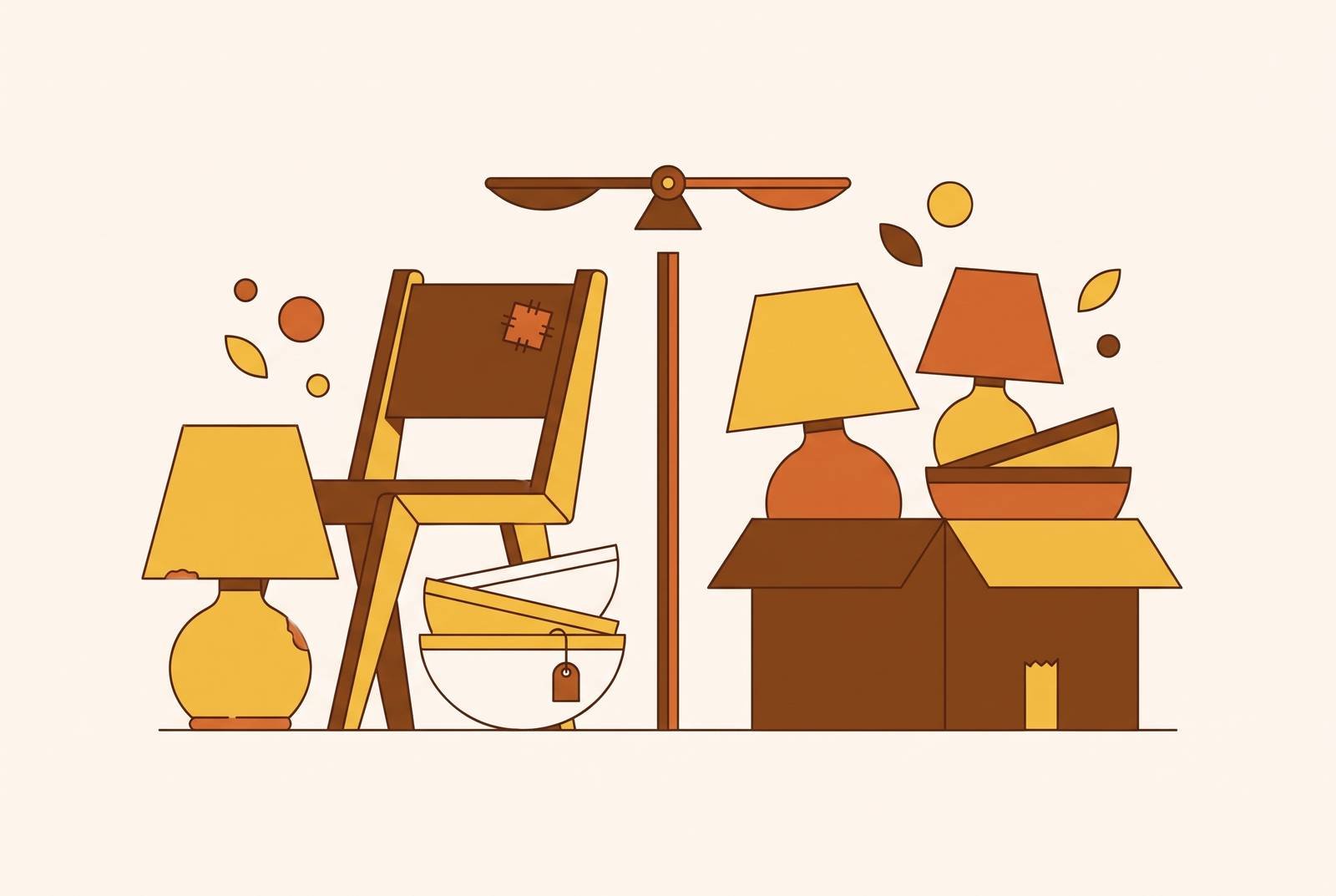
Buying secondhand versus new for household purchases is a category decision. Used furniture can deliver decades of service, while a cheap device nearing the end of software support can be an expensive detour. The right choice depends on which has dropped faster, the price or how well the item can still do its job safely.
Why the secondhand-vs-new question has no universal answer
“Always buy used” is as flawed as “always buy new.” Most consumer goods lose a significant share of their price when they leave the store, but not an equal share of their usefulness. That gap is where secondhand value lives. It narrows when wear affects performance, hygiene, or safety. A scuffed table can still serve dinner, but a helmet damaged by an impact cannot be trusted to protect a head.
The useful test is what remains after depreciation. How much service is left, what risks come with its history, and what might it be worth when you finish with it? Those questions matter more or less depending on whether the item is a sofa, a laptop, or a pair of shoes.
Furniture: the category where secondhand almost always wins
Solid furniture offers the clearest case for buying used because quality pieces can last decades while losing most of their price soon after purchase. The second buyer gets nearly as much use out of it without paying extra to be its first owner. A solid wood dining table never has to deal with battery fatigue. And a sound metal bed frame works just as well after someone else has put it together. For these pieces, cost per year is a better guide than whether they arrive in a box.
Construction is the starting point for inspection. The item should have solid wood or metal construction, intact joints, and no water damage or soft spots. Avoid particle board, which does not survive disassembly and reassembly well. For upholstered furniture, the fabric should be cleanable or suitable for recovering, but appearance alone is not enough. Upholstery can harbor allergens or pests, so inspect carefully before purchase and clean before use.
Buying nearby makes those checks easier and saves the cost of shipping. Facebook Marketplace, Craigslist, and OfferUp are the main channels for bulky furniture, with estate sales and thrift stores providing other options. You can inspect the joints instead of judging them from a flattering photograph. A table, like a dating profile, benefits from being seen in person.
Electronics: where the used discount is real but the remaining useful life calculation is essential
Electronics complicate the bargain because much of their wear is invisible. Battery degradation, approaching software support deadlines, and missing warranties can shrink an apparently generous discount. A clean screen tells you very little. The useful comparison is between the purchase price and the supported, dependable life still available.
Before buying, ask how old the device is, whether software support remains available, and whether its battery has been replaced or has degraded. Also check whether the platform allows a return if the item is not as described. For smartphones, laptops, and gaming consoles, research the specific model’s software support end date. A device two years from end-of-support has a defined limit on its supported useful life, regardless of its physical condition. Shiny is not a software policy.
Certified refurbished devices offer a different risk profile from private-party used sales. Manufacturer or vetted third-party offerings come with inspected batteries, a warranty, and a return policy, so the comparison involves protection as well as price. Accessories and peripherals, including cables, keyboards, monitors, and printers, raise fewer remaining-life concerns, making the used case stronger. The category demands more research where batteries and support windows determine how long the purchase stays useful.
Clothing and apparel: where brand, category, and condition determine whether used saves or costs you
Secondhand clothing ranges from near-worthless fast fashion to branded and vintage pieces that hold or exceed their original value. “Used” is not a price bracket here. Children’s clothing is the easy case because children can outgrow outfits in months, well before wearing them out. That makes cost per wear much lower when buying secondhand, since small differences in condition matter less when the clothes will be worn for so short a time.
Adult clothing requires more attention to the market. Patagonia, Carhartt, Levi’s, Lululemon, and Nike retain buyer demand on resale platforms because shoppers search for those brands. No-name fast fashion lacks that searchable signal and quickly loses most of its value. A deep discount alone therefore proves little. For branded or vintage pieces, the secondhand market may offer affordable access, but a resale label is no guarantee of a bargain.
Platform choice follows that distinction. Poshmark, Depop, and Vinted suit branded fashion, while thrift stores and estate sales are better suited to undifferentiated lots where researching every item is impractical. Regular-wear shoes mold to the previous owner’s foot, and cushioning can compress without obvious signs. New is usually the better choice for everyday wear, while secondhand poses less risk for display, collecting, or very occasional use.
Children’s gear and toys: high secondhand value, with one category to never buy used
Buy car seats new. A used seat is too much of a gamble when its crash history or storage conditions are unknown or its date stamp has expired, and damage to its structural integrity can be hidden from view. Safety cannot be established from tidy fabric. Cribs and sleep surfaces also require caution because older crib designs that predate current safety standards have been recalled. Before buying, look up the model in recall records.
Outside those safety-sensitive purchases, brief use creates strong secondhand value. As with children’s clothing, gear and toys are often outgrown or abandoned before their useful life is over. The Consumer Product Safety Commission maintains a searchable recall database that buyers should check before purchasing older toys. Toys in good condition are easy choices to buy used if they have no missing parts, broken mechanisms, or recalled components.
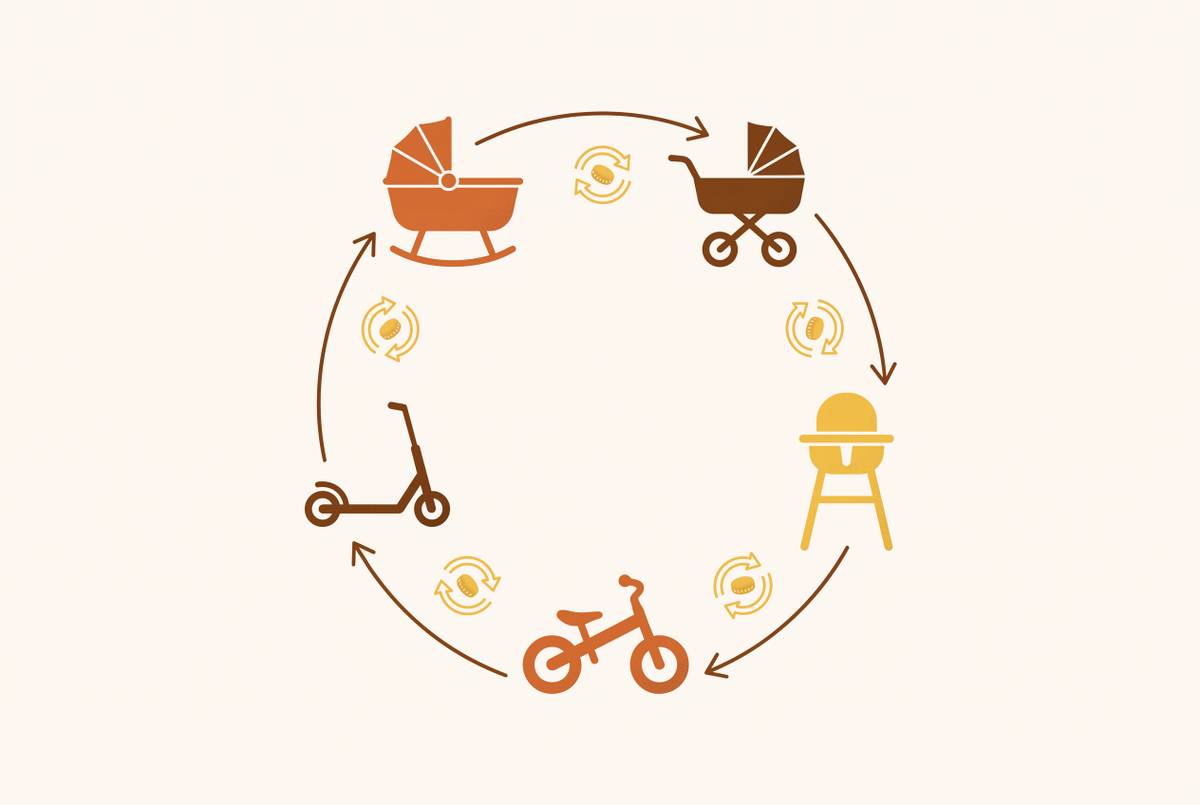
Strollers, high chairs, and baby carriers from known brands can also be worthwhile used purchases when their mechanical condition is good. Here, a functional inspection reveals more of what a buyer needs to know. Their safety is less dependent on unknown history than a car seat’s. That distinction explains why “children’s equipment” cannot receive one blanket recommendation, even when much of it offers excellent value.
Sporting goods, tools, and hobby equipment: the cost-per-use case for used depends on how often you’ll actually use the item
Sporting goods and hobby equipment are often bought with high hopes and sold with a sigh. Exercise equipment, bicycles, golf clubs, ski gear, and musical instruments regularly appear on local marketplaces in excellent condition after little use. One person’s abandoned ambition becomes another person’s sensible purchase.
For the buyer, expected use determines the financial case. A lower secondhand price is especially welcome for something used only now and then, because each outing or session has to make up more of its cost. A tile saw for one renovation or a drill for a single project can be bought used and resold afterward, bringing the effective cost per use close to zero. Frequent professional use changes the test. A circular saw used every week needs to work well, so its condition, brand, and how easy it is to get replacement parts all matter.
Bike, ski, and climbing helmets can look intact after an impact has compromised them, making new the right default when provenance is uncertain. For the rest of the category, local marketplaces help preserve the savings. Equipment is often bulky, and shipping can consume the price advantage. The same local channels used for furniture are therefore the main places to look.
Items that should almost always be bought new: mattresses, safety gear, and worn consumables
Mattresses are usually better bought new because prior use shortens their remaining lifespan, while allergen and hygiene history remain unknown. A used mattress also lacks a warranty. Once remaining life enters the calculation, the cost-per-night advantage over a new mattress with a full warranty can be narrow.
Car seats and safety helmets belong on the new side because impact damage cannot be judged by appearance. Everyday shoes belong there because cushioning and structure adapt to the previous wearer. Underwear and swimwear have a simpler reason, hygiene.
Older electronics past their software support window should also be passed over in favor of a supported purchase. A device approaching that point offers little comfort either. Its discount can amount to prepaying for a near-term replacement.
How to check what a used item is actually worth before buying or selling
Once an item passes the test for its category, check its price against what others have sold for. A listing records the seller’s asking price. Search the item on eBay and filter to sold or completed listings, then focus on transactions that actually sold. The middle range of several recent sales gives a more useful market price than unusually high or low outliers.
Like-new items with original packaging command more than good-condition examples without it, which command more than visibly worn but functional items. Pricing without that distinction is a common mistake on both sides of the transaction. For buyers, it can turn an ordinary used item into a near-retail purchase. For sellers, it can mean accepting too little for something in better condition than the comparison suggests.
eBay’s Product Research tool, once called Terapeak, is free in Seller Hub and shows sold-price history going further back, so patterns across seasons are easier to see. Facebook Marketplace has no full sold-price history, though a filter shows recent sold listings without bringing their prices together. That makes eBay sold data a useful guide to a starting price.
AI-powered tools can identify an item, grade its condition, surface sold-price information, and generate a listing from a photo. Even with these tools, setting a price still takes sales records for the right item in the same condition.
Turning the buy-used decision into a selling decision: what you already own has market value
The qualities that make secondhand goods worth buying also make suitable possessions worth selling. A sound table or barely used exercise bike does not stop having value because it is already in your home. Its remaining usefulness is what another buyer is shopping for. Selling captures some of that value before further depreciation reduces it.
OfferUp’s 2026 Recommerce Report found that nearly every shopper surveyed owned something they believed they could resell. More than half estimated those items were worth a meaningful sum that most had not acted on. The same report found that sellers most commonly put proceeds toward essential household expenses and bills, at 51%, with many also directing money toward savings or debt. The obstacle is often the work of identification, condition grading, price research, and listing.
For a first-time seller, the practical next step is small. Identify two or three items from categories with strong secondhand value, such as furniture, sporting goods, or electronics in good condition. Look up what they have sold for on eBay, using prices for items in the same condition. Then list them on the platform where that category has buyer demand.