Fast Fashion Alternatives That Save Money and Cut Waste
Secondhand shopping and swaps beat fast fashion's hidden costs when done strategically.
Fast fashion alternatives save money and cut waste when they replace repeat purchases. Thrifting, resale, clothes swaps and occasional rentals each solve a different wardrobe problem. Selling what you already own can help fund the switch. The payoff is better clothing at a lower ongoing cost, without turning getting dressed into a second job.
Why fast fashion became a financial trap, not just an environmental problem
A low price is easy to see. The cost of replacing that purchase is less obvious, especially when each replacement also looks cheap. Fast fashion combines low upfront prices with rapid trend changes and clothing that may not withstand much wear, so the buying cycle starts again quickly. Cost per wear is the more useful measure because it spreads the price over the times you actually use something. A bargain that barely leaves the wardrobe has an impressive career in doing nothing.
That cycle is built to keep people buying. Getting caught in it can mean paying more over time than buying fewer, more durable items. The United Nations Environment Programme says that making textiles uses more freshwater than most other industries in the world. One cotton T-shirt requires roughly 2,700 litres of water to produce, so repeated replacement has a cost beyond your bank account. The practical response is not a guilt-fuelled wardrobe purge, but finding cheaper ways to get clothing you will keep wearing.
The secondhand market has moved past the thrift-store stereotype
Secondhand clothing is now a mainstream market, with shopping options that extend well beyond a rummage through a thrift-store rail. Brands selling new clothing have entered resale themselves, including fast-fashion brands. That is a fairly decisive departure from the idea that used clothing is only for people with no other choice. When a fast-fashion brand makes room for resale, secondhand is no longer the awkward cousin at the shopping table.
The infrastructure has changed the experience as well. Peer-to-peer platforms let people buy clothes straight from other people's wardrobes, while managed marketplaces do more to check quality and offer authentication for luxury goods. Buyers can also shop in thrift stores, especially if they know which branded pieces last. You can choose between searching yourself and paying more for a service that does some of the screening.
Buying secondhand: how to thrift and use resale platforms without wasting time or money
Start with categories that retain useful life and resale value, including outerwear, denim, sneakers and luxury handbags. These combine recognizable brands with predictable demand and are available secondhand below retail prices. Durability gives the discount a purpose. Knitwear, dresses and designer tops can also be good buys, though they need a closer check for wear. Basic tees, short-lived trend pieces and mass-market accessories need a closer look because a lower price cannot make up for how they were made.
At thrift stores, recognizing specific outerwear can narrow the search. Patagonia Snap-T or Retro-X fleece, The North Face Denali or Nuptse puffer, and Carhartt vintage chore coats all fetch meaningful resale prices. Compare the item's condition with what you would pay elsewhere.
Online, match the platform to the purchase. Depop, Poshmark and Vinted offer wide peer-to-peer selections, but leave more of the checking to you because sizing and condition vary. Managed marketplaces such as ThredUp and The RealReal offer more quality control, with higher prices reflecting that service. For searches that extend beyond clothing into electronics or collectibles, eBay has broad category coverage. Its sold-listing data also helps you judge whether a clothing price is reasonable.
The checks are simple, but worth doing. Prioritize listings with multiple clear photos, since a condition label alone cannot show every worn patch. Treat vintage and international sizes as approximate, and look for actual measurements. For luxury purchases, Vestiaire Collective and The RealReal offer in-house physical authentication. Grailed uses digital, listing-level review instead, so those services should not be treated as interchangeable.
Selling what you already own: turning your existing wardrobe into cash
Outerwear, denim, vintage branded pieces and sneakers are strong candidates for resale, yet photographing them, writing descriptions, setting prices and choosing platforms can make starting feel disproportionately difficult. The obstacle is often the listing process. Reclaim's AI listing feature addresses that friction by using a photo to handle identification, condition grading and description writing. It cuts the time spent writing a listing by hand, leaving more of the weekend free.
Pricing still needs a real-world reference. Use eBay's “Sold Items” filter to see transaction prices instead of copying asking prices that may never attract a buyer. An ambitious listing is not evidence of a sale. Give recent comparisons more weight, especially for trend-sensitive clothing, since a sale from the past month is more useful than one from six months ago. Condition then helps place your item within that range, with like-new pieces toward the high end, lightly worn clothing in the middle and visibly worn items lower down.
Platform fees determine how much of that price you keep. A useful test compares the same sale price across platforms, since an expensive coat on one and a cheap top on another make a poor comparison. Facebook Marketplace local pickup has zero platform fees and no shipping to arrange. Vinted charges sellers nothing on standard sales, with buyers paying the protection fee instead, making it a low-cost option for European sellers. Depop dropped its selling fee in 2024, so U.S. sellers now pay only for payment processing.
Lower fees are not the only consideration. Poshmark charges a higher percentage fee above its sales threshold, but offers a fashion-focused community and buyer trust. eBay has higher percentage fees than Depop and Vinted on a typical sale, while offering a deep buyer pool and useful price discovery for branded or vintage pieces. eBay's 2025 figures put its active buyer count at 135 million. For a distinctive item, access to the right buyer can justify paying more to sell it.
Some items do not earn their listing time. Basic fast-fashion tees and generic trend pieces leave little profit once shipping is paid for. Send those to a swap or donate them rather than trying to make a tired top the start of a money-making business.
Clothes swaps: the zero-cost alternative that works for items too low-value to list
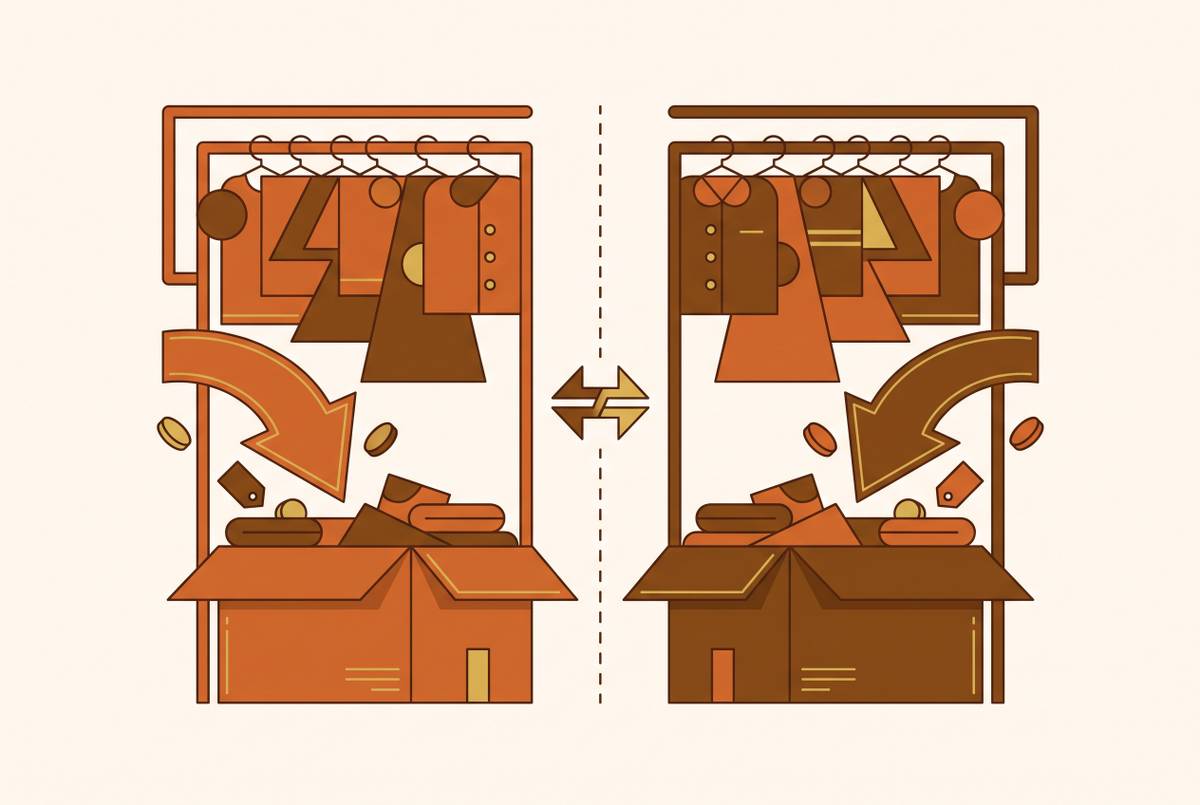
A wearable top can have little resale value and still be useful to someone else. Swaps let people trade those clothes for others worth about the same, without fees, shipping or listings. The economics are pleasantly unglamorous. You get something you might otherwise buy and pass on something you no longer wear. Friends and family group chats, neighborhood social media groups, and organized church or community center events can all provide a setting.
Kids' clothing works especially well for swaps because children often outgrow it before it gets much wear. School swaps can therefore turn a recurring expense into a practical handover. To keep any swap straightforward, bring clean, wearable items in good condition, sort them by size and agree on a one-for-one or bring-a-bag, take-a-bag rule. Nobody needs a valuation committee for a cardigan. Keep high-value branded pieces out of this pile, since a resale platform is better suited to getting paid what they are worth.
Renting clothing for occasions: when buying anything — new or used — isn't the right move
Some wardrobe needs have an expiry date. A wedding guest dress, interview suit, costume or ski jacket for one trip may get only one or two outings before becoming something else to store or sell. Buying secondhand reduces the purchase price, but it does not remove that ownership problem. Renting lets you pay for the use and return the item afterward. For occasional wear, that can be a better fit than acquiring even a well-priced used piece.
The comparison is with the cost of buying and later reselling, including fees and effort. A secondhand purchase may recover some money when sold, but that requires another listing and another transaction. Rental can avoid that work altogether. Both peer-to-peer wardrobe rentals and managed services for formal or occasion wear serve this need, although the market is more fragmented than resale.
Timing is the practical catch to account for. Rental requires planning and works best where local options are available or shipping timelines are reliable. A last-minute need may still be better served by a secondhand purchase. People already selling clothing can also earn money by renting out pieces they wear only now and then, while still keeping them.
Putting it together: a room-by-room approach to exiting fast fashion while generating cash
To turn these options into a workable routine, pair clearing out with changing how you buy. Selling clothes you no longer wear can pay for better-quality secondhand replacements, so you can make the switch without setting aside more money. Work through one category at a time. The aim is to give each item a destination.
Start in the closet by separating what you keep and wear from what you can sell, swap or donate. Branded pieces, vintage clothing, outerwear and denim belong in the sell pile when their condition supports it. Clean, wearable pieces with low resale value belong in the swap pile. Use sold comparisons to price the stronger items.
Next, move through kids' rooms for outgrown and seasonal clothing that is still in good condition. Give those pieces a chance at a swap before donation, since their useful life may extend well beyond their fit in your household. In storage, separate coats, ski gear and suits worn once from everyday clothing. Check whether they could be rented out before deciding to sell.
For the sell pile, photograph everything in one session and use Reclaim's photo-to-listing workflow to reduce the description and pricing work. Then choose where to sell each item based on what it is and what it is worth: eBay or Depop can help find buyers for high-value branded pieces, while Depop or Poshmark suit fashion that appeals to lots of people. Facebook Marketplace local pickup is useful for bulky or lower-value items that do not justify shipping.
For future purchases, make secondhand the first stop. Check sold listings to understand used prices before buying new, and reserve swaps and rentals for the needs they handle better. That keeps money from leaking back into the same replacement cycle you just interrupted. Less waste follows from keeping useful clothing in circulation, but the financial gain is direct. Your wardrobe costs less to maintain, and what you stop wearing can help pay for what comes next.