Emotional Attachment to Objects That Belong to the Past
Why certain objects feel impossible to discard, even when unused.
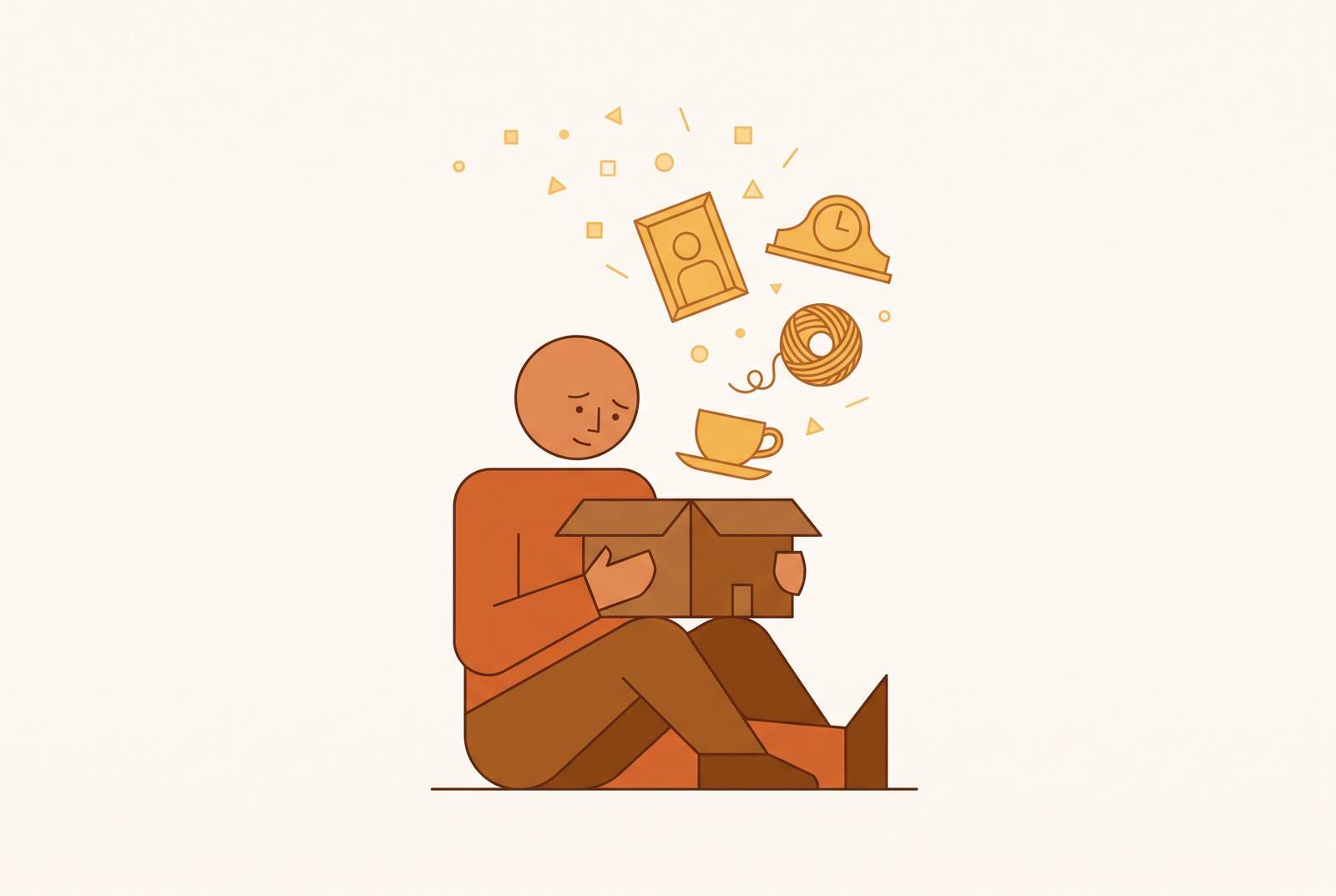
Emotional attachment to objects from the past is a set of well-documented psychological mechanisms, memory anchoring, identity reinforcement, inherited obligation, and the endowment effect, that make letting go feel like genuine loss. Understanding how those mechanisms work is the first real step toward moving through them.
Owned Objects as Extensions of the Self
The brain uses physical objects as retrieval cues for memory. A concert t-shirt isn't just a reminder of a night out. Throw out the shirt and some part of the brain registers it as throwing out the night itself, even though that's not literally what's happening, a structural feature of memory, not a mood. Nostalgia comes and goes. This mechanism runs in the background all the time, whether anyone's feeling wistful or not.
Objects also do identity work. They reflect who a person was, who they are now, or who they're hoping to become, and keeping them functions as a kind of self-continuity rather than clutter accumulation. Old running shoes from a faster decade, a guitar nobody's touched since college, a half-finished knitting project meant for "someday": none of that reads to the brain as junk taking up a shelf. It reads as a piece of self-definition, filed under "subject to change."
Then there's the security blanket effect. Familiar objects lower anxiety simply by being familiar, so even things that never get used still provide a kind of background emotional ballast. The mind likes what it already knows. That's why getting rid of something can feel uncomfortable even when the conscious, rational plan is to get rid of it. The discomfort is a sign the mechanism is working exactly as designed, just not for the goal currently on the to-do list.
How the endowment effect inflates what we think our objects are worth
Ownership alone changes how much something is worth to the person who owns it, no memory or sentiment required. Hand someone a mug for free and ask them to sell it back; they'll typically ask for more than they would have paid to buy that same mug a minute earlier. That gap has a name: the endowment effect. Loss aversion and a sense of psychological ownership team up to make the pain of losing something feel bigger than the pleasure of gaining an equivalent thing. The sting of parting with an item outweighs whatever practical or financial upside comes from letting it go, and this holds even when someone fully knows the item sits unused and wouldn't buy it again at today's asking price.
Stacking memory anchoring and identity reinforcement on top of plain ownership compounds the overvaluation. The object stops being just a thing someone owns. It becomes a fragment of personal history, and losing a fragment of personal history feels like a bigger deal than losing a mug. That's the gap between what an object feels worth and what it's actually worth on the market, and it's a wide one. Emotional pricing almost always overshoots.
Active listings make the problem worse. Scroll through a marketplace and see many people asking the same high price for the same lamp, and it's easy to mistake that asking price for evidence of value. It's evidence of hope, not value. Sold listings show what buyers actually paid, which is the only number that reflects real market value. Everything else is just sellers talking to themselves.
The two attachment patterns that feel most like moral obligations: inherited guilt and future fantasy
Two patterns in particular don't attach to a memory so much as to a relationship or an imagined future self, which makes the usual "do you use it?" test fall flat. Neither one is really about use.
Inherited guilt appears with objects passed down from someone who mattered. A dining table that hosted twenty years of family dinners doesn't get kept because anyone eats at it anymore. It gets kept because getting rid of it feels like dishonoring the person who handed it down, or cutting a thread connecting back to them. The table becomes a stand-in for the relationship itself, so releasing the table feels, at a gut level, like releasing the person. That's a different kind of anxiety than the security blanket effect. The security blanket is about personal comfort. Inherited guilt is relational: it's about loyalty to someone else, living or not.
Future fantasy syndrome runs the opposite direction, toward a self that hasn't arrived yet. Old clothes held onto because the style might circle back. A bread maker kept for a baking phase that's been "about to start" for six years. Outdated electronics kept "just in case." The imagined future person who finally uses the bread maker feels real enough in the moment to justify the shelf space, even though that scenario rarely actually occurs. Loss aversion fuels this one too: not having the item on hand in some hypothetical future feels worse, in the moment of deciding, than the very real cost of storing it right now.
Neither pattern responds well to logic about frequency of use, because neither one was ever about frequency of use. One is about loyalty. The other is about possibility. Arguing with either using a spreadsheet is like bringing a calculator to a eulogy.
Where normal attachment ends and hoarding disorder begins
Everything described so far is universal wiring, not pathology. Hoarding disorder is a separate, clinical condition, and the line is drawn by intensity, by resistance to change, and by real functional consequences. Melissa Norberg, a professor of psychology at Macquarie University who studies hoarding disorder, places the line at function and safety: clutter becomes a clinical concern when it creates a safety risk or blocks a space from being used the way it's meant to be used, when the sofa can't be sat on, the kitchen can't be cooked in, the bed can't be slept in.
Oddly enough, the minimalism trend can make this harder to address rather than easier. Jessica Grisham, a psychology professor at UNSW Sydney who researches hoarding, points out that the social-media image of the spotless, clutter-free home piles on stress and self-criticism for people already struggling, which tends to push them further from help rather than closer to it. Clutter can also build up as a side effect of depression, substance use, or other conditions, in which case the mess is a symptom sitting on top of something else.
Most people reading this live well inside the workable range, where understanding the mechanisms above is enough to move through them. For the smaller group dealing with something closer to a clinical pattern, professional support is the right next move, and nothing that follows in this piece is a substitute for that.
Why life transitions make past-laden objects impossible to ignore
A move forces a reckoning that everyday life lets people postpone more or less indefinitely. Nobody sorts through the hall closet on a random Thursday. Everybody sorts through it the week before the movers show up.
Every item that gets carried through a move costs something real: a box, packing materials, truck space, someone's back, time spent unpacking, and in some cases a storage unit rented to hold things nobody's looked at in years. That's money and effort spent moving objects nobody uses to a new address where they'll continue not being used, just with a new zip code.
The psychological mechanisms from earlier don't take a break during a move. They get louder. Memory anchoring slows everything down, pulling people into old photos and old t-shirts at the exact moment speed matters most. Inherited guilt gets sharper, because giving up a grandmother's china before a move feels more final than giving it up on an ordinary Tuesday with no boxes in sight. Future fantasy gets more acute too, especially when the new place is smaller, because people try to hang onto every option in a space that is, quite literally, shrinking around them.
The most common mistake is trying to sort everything in one marathon weekend. The sheer volume of decisions burns through mental energy fast, and once that energy's gone, the default flips from deciding to just keeping everything, box after box, unopened. Starting the process six to eight weeks ahead of a move gives enough runway to separate the genuinely hard emotional calls from the easy logistical ones, and it leaves time to actually sell things instead of abandoning them curbside the morning the truck arrives.
The memory lives in you, not in the object
Memories don't live inside objects. They live in the mind. An object going away doesn't take the memory with it. That single fact dissolves the whole equation between releasing a thing and losing what it represents. An object works as a retrieval cue. The memory survives the yard sale. What disappears is the cue, not the experience the cue used to point to.
Inherited items work the same way. The love or connection a grandmother's china represents is relational and internal. It was never actually stored inside the cabinet. Keeping the china preserves the china. The relationship lives somewhere else entirely, in the mind of the person who misses her.
That reframe turns into a few concrete moves. Photographing a sentimental item before it goes gives the brain a visual retrieval cue without requiring a closet to hold the physical thing. Passing inherited items along to family members who'll actually use them honors the person who gave them in a more direct way than sealing the item in a box in the garage. Keeping one or two truly meaningful pieces from a larger collection, rather than every single piece, still tells the story. It just doesn't need a storage unit to do it.
The same logic defuses future fantasy. The future self who might someday need the bread maker is hypothetical. The present self pays rent on a storage unit for that bread maker, and paying real money for a hypothetical person's convenience is a bad trade most of the time.
A sequenced approach to sorting objects with emotional weight
Emotional energy runs out, the same way physical energy does, so the order of decisions matters as much as the decisions themselves. Starting with the hardest box in the house, the one full of old letters and photographs, is a reliable way to burn out in twenty minutes and quit for the week.
A four-box structure, Keep, Donate, Sell, Trash, gives the brain external scaffolding so it isn't inventing a new plan for every single item. The categories get fixed before the sorting starts. The only decision left in the moment is which box something goes in, not what happens to it afterward. That split, separating the emotional call (keep or let go) from the logistical one (donate, sell, or toss), lowers the cost of each individual decision.
Sequence matters just as much as the categories. Start with the stuff that carries zero emotional charge: expired toiletries, broken gadgets, the fourth vegetable peeler, clothes that haven't fit since a different presidential administration. Build some momentum there before touching anything sentimental. That's energy management, plain and simple, and the confidence from early wins carries straight into the harder decisions waiting in the next room.
Set a minimum price before starting a sell pile. Anything below that bar goes straight to donation instead of sitting in a sell pile that quietly turns into a fourth category of things that never actually sell. Short sessions beat marathons, so a timer for a fixed stretch per sitting protects mental energy and makes it much easier to come back tomorrow instead of never touching the pile again. An outside perspective helps too. A friend or a professional organizer isn't carrying the same loss aversion and endowment effect that make solo sorting so slow, so they can call an item "donate" in two seconds flat while the owner is still composing its eulogy.
What past-laden objects are worth on the open market
The same attachment that makes an object hard to release also makes its owner the worst possible judge of what it's worth, which is how so many sentimental items end up overpriced, unsold, and eventually donated or junked for nothing after months of sitting in a listing nobody clicked on.
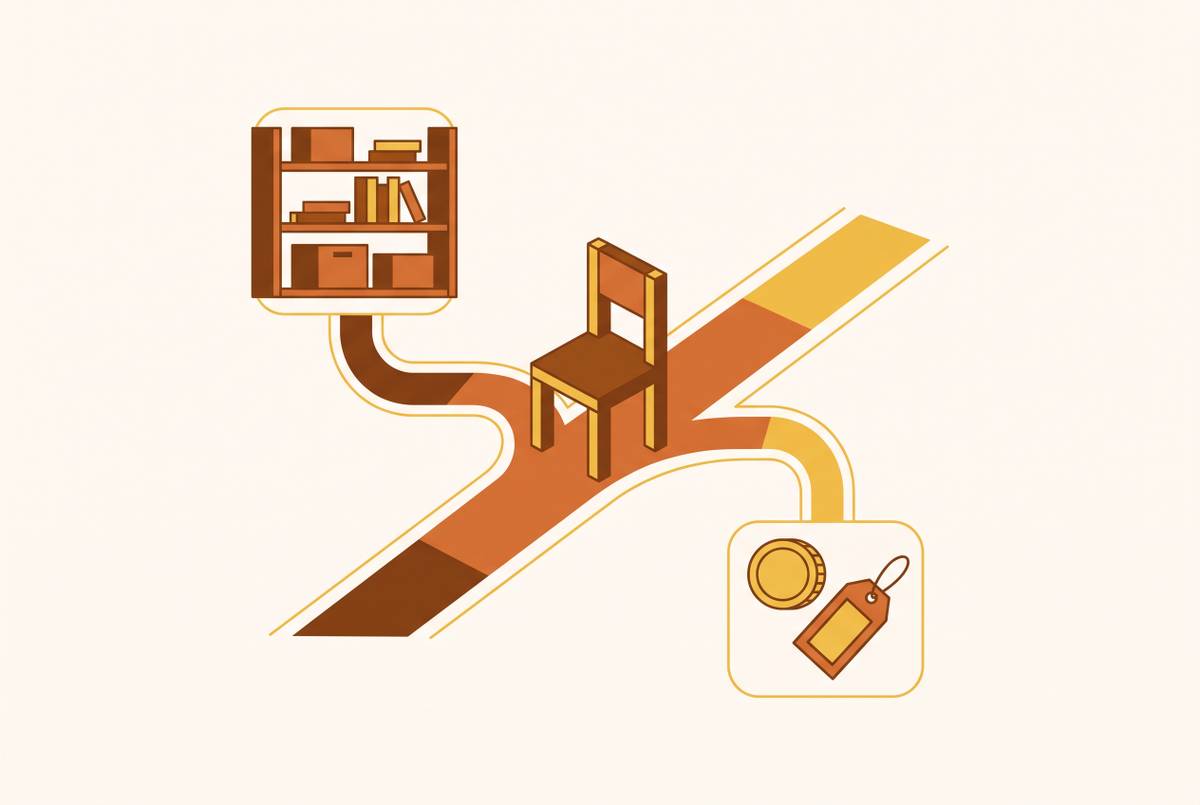
The fix is simple: price from sold listings, never active ones. Active listings show what other sellers are hoping to get. Sold listings show what buyers actually handed over cash for, and that number, not the hopeful one, is the real market price. It usually comes in well below whatever the active listings are advertising. On eBay, that means using Filters, then Show only, then Sold Items, a separate option from Completed Items, and reading the cluster of recent results rather than fixating on the one outlier that sold for triple everything else.
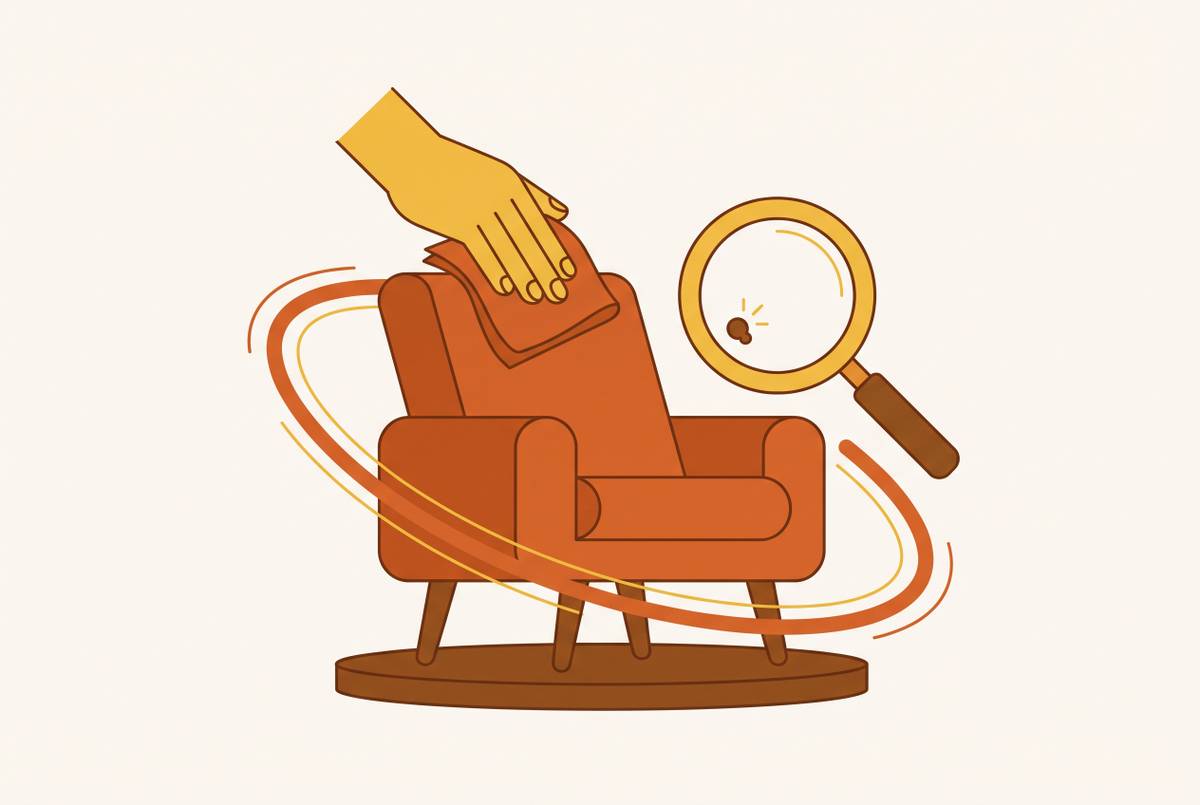
From there, condition does the rest of the work. Start from the best comparable sold price for the item in question, then discount down based on actual condition, actual wear, actual completeness, not the condition remembered from however many years ago the item was bought. A sold listing is the closest thing the market offers to a lie detector test for an asking price, and running an item through it before listing it turns a listing that would quietly age into another box headed for donation into a sale that happens in a week.
Sources
- How to price used items: sold data vs. asking prices - Reclaim
- Ownership as a component of the extended self
- The psychology of stuff and things
- Unpacking the construct of emotional attachment to objects and its association with hoarding symptoms - PMC
- Attachment Styles and Our Material Possessions
- Object attachment and emotions in hoarding disorder - ScienceDirect
- Are You a Clutterer or Hoarder?
- The Proust effect and hoarding symptoms: relationships among memory vividness, object type, and urge to save