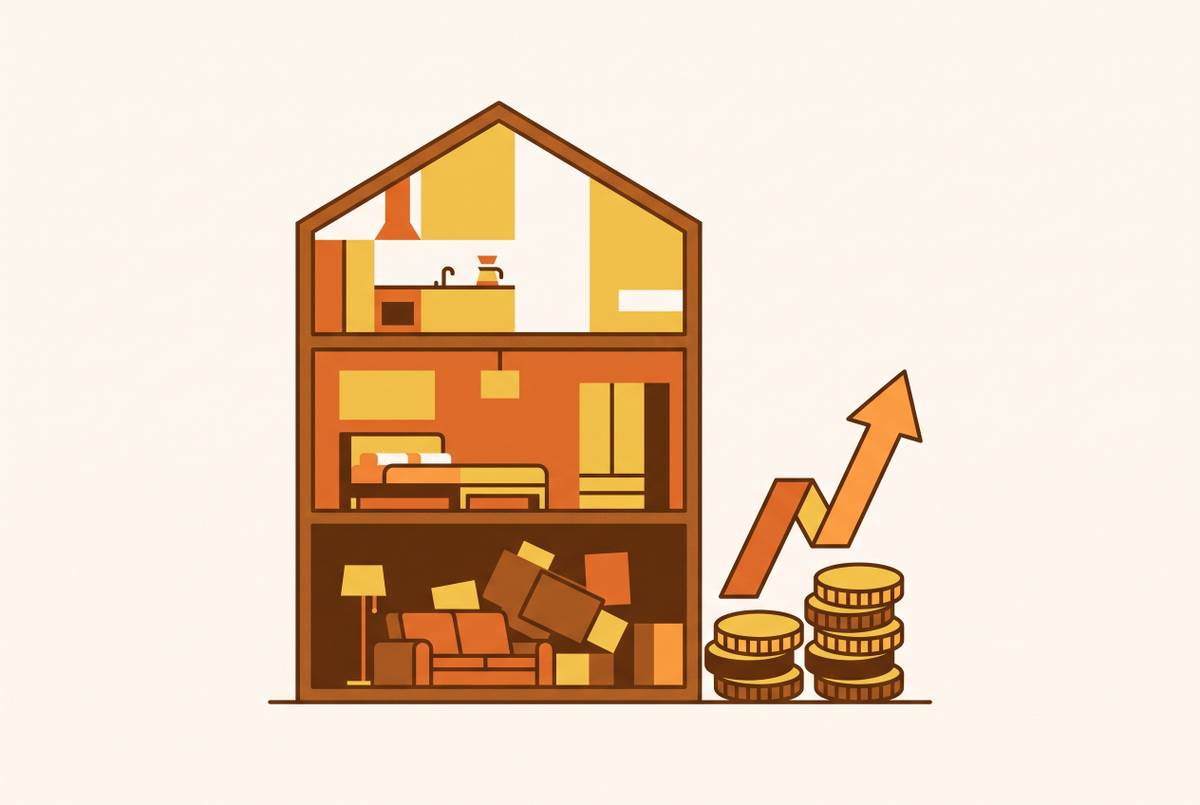
The One-in-One-Out Rule Applied to Reselling
Reselling your outgoing items transforms decluttering from a chore into actual side income.
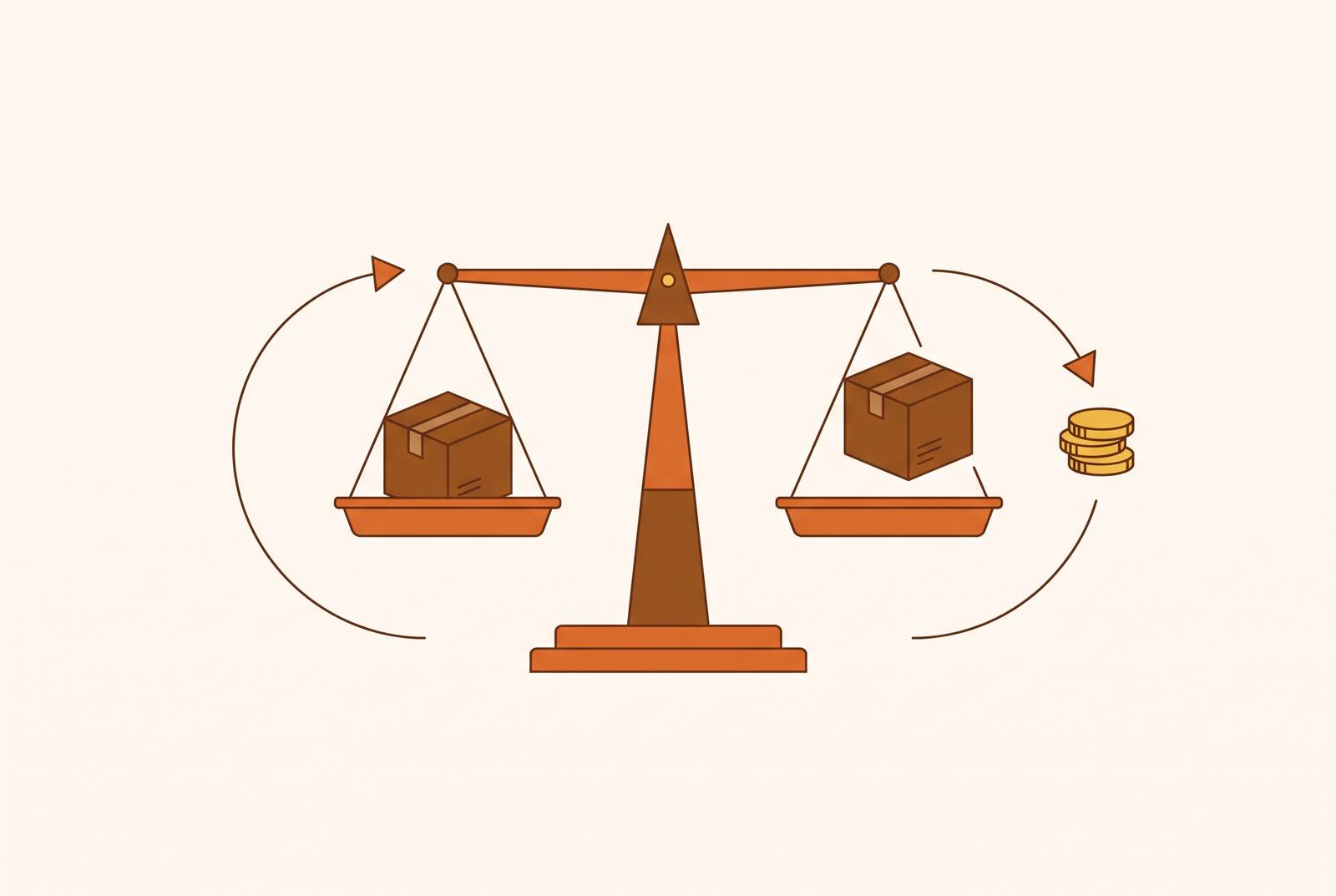
The one-in-one-out rule says: for every item that comes into the house, one goes out. Sell it, donate it, toss it, doesn't matter, as long as something leaves. Most people get the "out" part backwards: it defaults to whatever's laziest (donate, or worse, forget about it) when it should default to selling. That one swap turns a maintenance chore into actual side income, and it decides whether the rule sticks or dies out after three weeks.
A reality check first. One-in-one-out only works once the house is already decluttered. It's a volume-maintenance tool, not a fix for an existing mess. Research has found the average household holds around 300,000 items, and separately, roughly two in five U.S. adults describe their own living space as cluttered. Starting from that pile, one-in-one-out won't dig anyone out of anything. It just stops the sinking once you're already at the surface.
Impulse buying wrecks the math anyway. U.S. consumers spend an average of nearly $282,300 over a lifetime on impulse buys, and nine out of ten shoppers admit to at least one in the past month. Almost none of those trigger a matching item going out the door. The "one in" side of the ledger fills up fast. The "one out" side sits untouched in the closet, judging quietly.
The psychological mechanism that makes "out" feel harder than "in"
Bringing something home is easy. Getting rid of something is a much heavier lift, and that's not a willpower problem, it's wiring.
Start with the endowment effect: people overvalue things simply because they own them. Someone asked to price their old blender will name a number higher than what they'd pay for that same blender sitting on a store shelf. That's not math, that's ego talking. And it means the stuff that actually leaves the house tends to be the boring stuff, broken chargers, duplicate spatulas, obvious junk, while the real clutter (the sentimental sweater, the "might fit again" jeans) barely moves.
A chemical mismatch causes that: acquiring something gives the brain a small dopamine hit, the same mechanism behind checking a phone notification. Acquiring something gives the brain a small dopamine hit, the same mechanism behind checking a phone notification. Letting go doesn't fire that same reward. It runs against an older instinct to hold onto resources instead. So the rule asks someone to trade a good feeling for a neutral, sometimes uncomfortable one, right at the moment they're least in the mood for it.
Stress makes it worse. More than four out of five people report making comfort purchases when they're anxious, sad, or bored, which is exactly the emotional state attached to a lot of "one in" moments. That makes the "one out" obligation land less like balance and more like punishment. Nobody wants their bad day capped off with a forced goodbye to a hoodie.
How making "sell" the default exit rewires the habit
Stop treating "one out" as a synonym for donate or trash. Make selling the default exit instead, full stop.
The shift sounds cosmetic. It doesn't sound cosmetic once you see the mechanism: a donated item disappears with no feedback and no reward, nothing to counter the overvaluation the endowment effect just built up. A donated item disappears with no feedback and no reward, nothing to counter the overvaluation the endowment effect just built up. A sold item gets a price tag attached to it, and suddenly parting with it feels less like a loss and more like a transaction working in the seller's favor. Money changing hands beats a donation receipt nobody will ever look at again, every time, because parting with something feels more like a fair exchange when a concrete return is involved.
Timing matters just as much as the reframe. A new item showing up is the natural trigger the rule already builds in. That's the exact moment motivation to deal with the outgoing item peaks, not two weeks later once the guilt has faded and the item's quietly become part of the furniture. Act inside that window.
Category matching sharpens the timing further. Buy a new jacket, and jackets are already on the brain, sizes, brands, what's actually worth keeping. Pricing and listing the old jacket right then takes minutes. Wait a month and it turns into an afternoon project nobody has time for.
Choosing where to sell each outgoing item
Platform choice comes down to matching the item to the marketplace built for it, and getting this wrong is the single most common reason a listing sits for three months with zero views.
Big, heavy, awkward things (couches, dressers, that treadmill nobody's touched since March) belong on Facebook Marketplace. Buyers pick them up in person, so there's no shipping cost, no box-hunting, no trip to the post office. Local pickup sales carry no platform fee. Shipping through Facebook's own checkout instead introduces a platform fee on the transaction.
Shippable, searchable, or niche items do better on eBay, where the buyer pool isn't local, it's global. eBay's scale means the buyer pool isn't local, it's global, reaching serious collectors and niche enthusiasts that no neighborhood marketplace can match. That reach matters for anything collectible: a rare vintage amplifier finds its ideal buyer three states away, not two blocks away.
Some categories split further still. Electronics resellers tend to run TVs and game consoles through Facebook Marketplace for quick local turnaround, while routing rare or high-value vintage audio gear to eBay to reach serious collectors. Clothing splits by style: fast-fashion basics move on general resale apps built for that category, vintage and streetwear do better on platforms built around those specific buyers, and designer bags belong wherever the luxury resale crowd already shops.
Pricing the outgoing item using sold data, not guesswork
Never price off what's currently listed. Active listings show what sellers hope someone will pay, not what anyone actually paid, and that gap can be enormous. A single search can turn up listings asking wildly inflated prices for common items, while the actual sold history shows what buyers genuinely paid, often a fraction of that ask.
The fix: filter for sold listings, not active ones. On the eBay app, search, tap Filter, tap Show More, switch "Sold Items" on. That pulls the last 90 days of completed sales. On desktop, the same toggle lives in the left column under "Show only: Sold items," and sorting by price puts the median right in the middle of the list where it's easy to spot. Sorting by "Ended Recently" gives the freshest read on where prices are trending, since most items in 2025 sell fastest as Buy It Now rather than auction.
For a longer view, eBay's Product Research tool pulls a longer historical view of sold data. It also shows the actual price accepted on Best Offer deals, not just the asking price, which matters because a standard sold search shows what the listing said, not what the buyer paid after negotiating. That gap quietly inflates every comp a basic search shows.
Condition is the last variable, and skipping it wrecks the whole exercise. Average every sold price together and a mint "Used" iPhone gets blended with the same model with a cracked screen, and that cracked one might sell for roughly half. Match the comp to the actual condition sitting in front of you.
Writing a listing that moves the item quickly
Photos filter buyers before a single word gets read. Clear lighting, multiple angles, close-ups on any scuffs or wear. Stage it somewhere clean, not on a bed covered in laundry. Buyers on both eBay and Facebook Marketplace scroll fast and decide faster, and a blurry photo taken in a dim hallway loses the sale before the description even loads.
Titles need specifics, not adjectives. "Modern Gray 3-Seater Sofa, Excellent Condition" pulls buyers in through search. "Sofa" pulls in nobody. Include the brand, the model number if there is one, the condition, and whatever spec a buyer would actually type into a search bar.
Disclose flaws upfront, even though it feels backwards, like pointing at the scratch is going to scare buyers off. It does the opposite: it filters out the buyers who'd return the item later or leave a bad review over something that was visible in photo four the whole time.
Figuring out what an item is worth, writing a description, choosing a platform, all of that adds up to a task that's easy to keep postponing. Tools now exist that identify an item from a photo, assess rough condition, and draft the listing text automatically, cutting out the exact step where most people give up and toss the thing in a donation bag instead.
Item categories that tend to resell well
Electronics lead the pack. The category cleared over $2 billion in resale revenue, with Apple and Sony holding strong positions throughout, and Nintendo was among the strongest performers in 2025 across the electronics resale category.
Gaming deserves its own mention inside that. Classic entries from a major gaming franchise, a fantasy adventure series, a plumber-themed platformer, a crossover fighting title, drive steady demand on their own. Retro hardware keeps performing well too, riding a nostalgia wave that rewards sellers who pick the right platform and condition. Collectible cards can hold strong resale value, particularly when condition has been formally verified.
Clothing and accessories brought in nearly $60 million in resale revenue off roughly 2.5 million items sold, with Coach, Nike, Michael Kors, Lululemon, and Kate Spade topping the brand list. None of that surprises anyone. What's actually surprising is what nobody thinks to sell: TV remotes, old routers, calculators, digital cameras. Boring, easy to skip past while clearing out a drawer, and yet these smaller electronics find consistent buyers who are actively searching for exactly that item.
Building the habit so it runs without willpower
The rule's real advantage isn't the math but the trigger. A new item arriving in the house is a fixed, predictable, high-motivation moment, and the habit works best when "list the outgoing item" gets stacked onto that exact moment, before the new purchase even gets unboxed.
For anything uncertain, a holding drawer works as a pressure valve. Give an item 30 days in a designated spot. If nobody's gone back for it after 30 days, it moves to the sell queue instead of the donation pile. That one rule kills the snap-decision anxiety that kills a lot of good intentions before they start.
Zoomed out, the timing couldn't be better. The global resale market was valued at around $200 billion in 2023, with projections putting it near $400 billion by 2027. Anyone building this habit now is stepping into a market on its way up, not one on its way out.
And the cost of skipping all this isn't nothing. The average person in one country loses roughly two and a half days a year hunting for misplaced items, and that country's households collectively spend around three billion dollars a year replacing things that were never actually gone, just buried. The habit pays out twice: once when the item sells, and once every time it stops something from vanishing into the pile.