Room-by-Room Declutter Sequence for Maximum Resale Value
Decluttering first yields thousands in resale value if you tackle rooms in the right order.
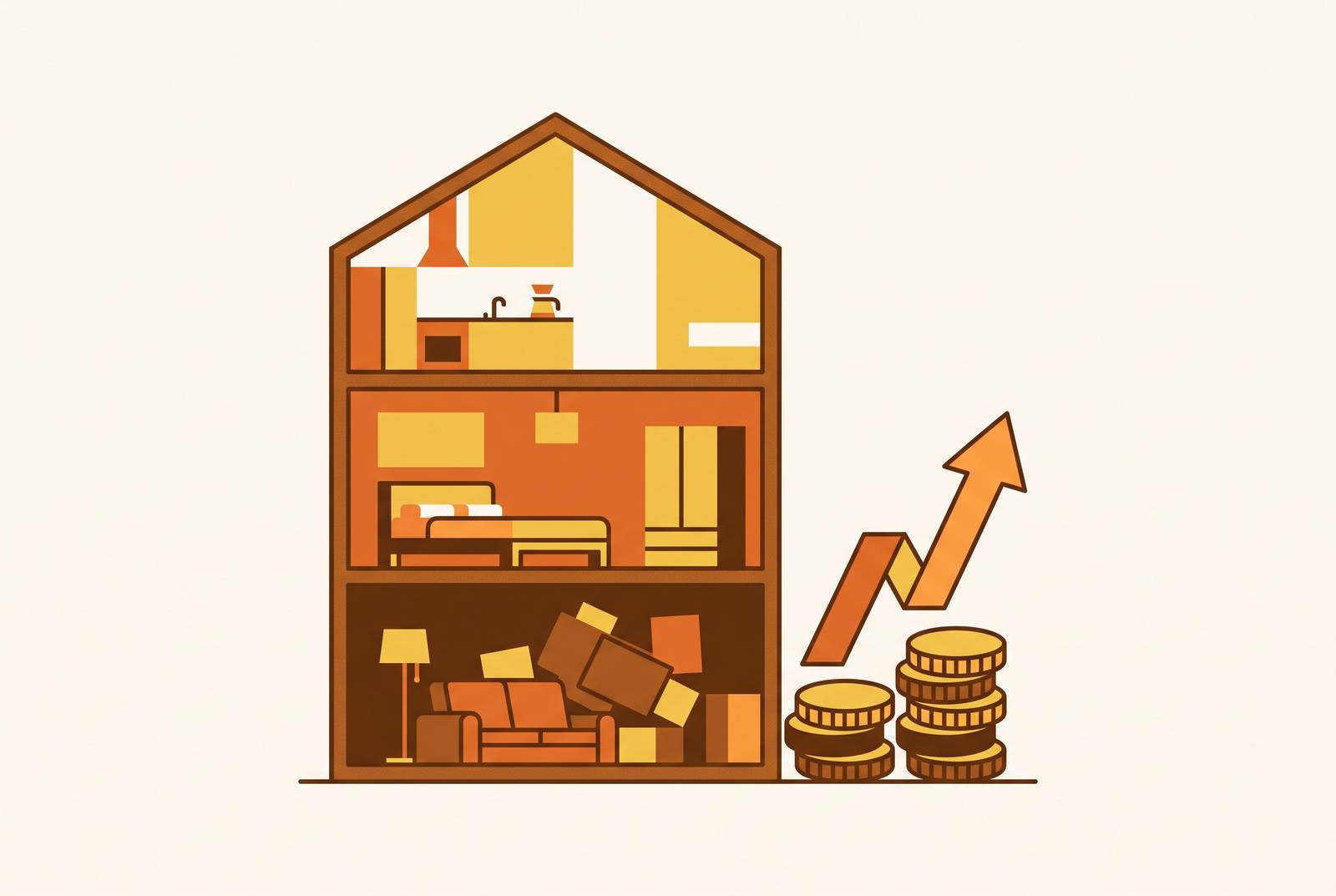
Decluttering isn't a one-weekend purge, it's a sequence, and the order you tackle rooms in determines how much resale cash you surface and how fast you can turn it around. Do the rooms in the wrong order and you'll bury your best inventory under a pile of stuff nobody wants to buy.
What a decluttered home is worth before you list a single item for resale
Before touching a single closet, it helps to know the number attached to this whole exercise. A HomeLight survey of real estate agents found decluttering alone adds an estimated $11,706 to a home's sale price. Staging adds about $13,477, roughly 3.3% of a median $405,300 home, and a fresh coat of paint tacks on close to $12,130. Sellers who declutter typically walk away with 3% to 5% more in proceeds. Michael Russo, a top agent in Warwick, Rhode Island, says a home "will definitely sell quicker and for a higher price if the house is decluttered and looking good."
The payoff isn't flat across the country, either. An earlier HomeLight survey found the Pacific region sees decluttering and deep cleaning add $16,824, while the Midwest sees $7,428. Real money either way, just different amounts depending on where the house sits.
Most sellers end up packing away somewhere between 50% and 70% of their belongings before listing. Cluttered homes sit on the market longer and pull lower offers, mostly because buyers can't tell how big the rooms actually are under all that stuff. The same logic applies at the item level, not just the house level. A cleared, well-lit, photographable item in good shape sells for more than the identical item buried in a junk pile. That's the real thesis here, so keep it in your back pocket as you move room to room.
Building a realistic timeline before the first box moves
For a typical three-bedroom home, plan on 2 to 4 weeks of steady work, an hour or two a day. Bigger houses, or ones lived in for over a decade, take longer. That's not a guess; that's just how much stuff accumulates.
Break the house into roughly 20 small chunks instead of tackling "the whole house" as one task. Every closet counts as its own chunk. Each kitchen zone (pantry, cabinets, drawers) is its own chunk. Each bathroom, the garage's storage shelves versus its main floor space, all separate sessions with a clear finish line. This matters more than it sounds like it should: vague, giant tasks stall out. Small, specific tasks get done.
A few tricks that actually work:
The 15-minute timer. Set a timer, work one step, stop when it goes off. Nobody dreads 15 minutes of anything. Repeat until the chunk's done.
Ask better questions while sorting. A professional organizer recommends asking "have I had the opportunity to use this in the last six months?" instead of just "did I use this?" The opportunity framing catches stuff you swore you'd get to. Follow with "do I expect to use or need this?" (not "might I"), which cuts through wishful thinking fast.
Author Dana K. White, who wrote Decluttering at the Speed of Life, suggests limiting yourself to the number of boxes you'll actually have room for at the other end. It forces real decisions instead of pushing them down the road.
Another approach is the category method: pull every item of one type into a pile (all the mugs, all the sweaters) before deciding what stays. It stops you from re-sorting the same drawer three times.
At each session, sort into four piles: keep, sell, donate, toss. Decide the destination before anything leaves the room, or you'll end up with a mystery pile that just becomes clutter again.
Save sentimental items for last. Photo albums and grandma's china cabinet will stall a session for hours if you start there. Get the easy, high-value stuff listed first, then circle back to the emotional stuff once you've got momentum (and cash) on your side.
Bedrooms and closets first: the high-value, low-friction starting point
Start in the bedroom. Professional organizers point to it for a reason beyond the obvious "it's personal, it feels good to clear it" logic (though that's true too): bedrooms and closets quietly hold some of the highest-value, easiest-to-miss resale items in the house.
Barrett Sotheby's International Realty recommends removing at least half of what's stored in closets. Donate anything unworn in the last year, box up off-season stuff, and use matching hangers for what's left. But before anything goes to donation, pull these aside for resale:
Brand-name or barely-worn clothing and shoes sell fastest and for the most money, so sort these out before the basic t-shirts and jeans. Sneakers from popular athletic brands move fast, along with athleisure wear and denim from a past fashion era. Designer handbags are compact, easy to photograph, and tend to hold value well. Check dresser drawers and under-bed bins for old phones, tablets, and chargers, these take up almost no space but punch well above their weight in resale value. Jewelry and unopened gifts get overlooked constantly, and they sell consistently once someone actually lists them.
Match the item to the platform. Poshmark tends to run 10% to 20% higher than eBay for women's fashion, since its buyer base is built for curated clothing. eBay is the better call for men's workwear brands like Carhartt and Filson, plus vintage Americana. Depop suits Y2K and streetwear. Etsy works for genuinely vintage pieces. And electronics belong on eBay, full stop, no other platform has the buyer depth for older devices and parts.
There's a psychological upside here too. Research from UCLA's Center on Everyday Lives of Families, which studied 32 Los Angeles families, linked a cluttered home to higher stress for the person managing the household. Clearing the bedroom first gives you a calm home base to work from as the harder rooms come up.
Kitchen and dining room: the steadiest resale category in the house
Russo names the kitchen and bathroom as the two most important rooms for a home sale. His instruction is blunt: "Remove all items from countertops, from on top of fridges, magnets on the front, make it look like nobody lives there."
Kitchenware happens to be one of the steadiest resale categories on both eBay and Facebook Marketplace, mostly because replacement cost runs high and used condition barely dents the price for a lot of it. Pull these aside:
Small appliances used once or twice, bread makers, juicers, air fryers replaced by a newer model. Matching dish sets and glassware left over from a downsizing or a merged household. Cast-iron pans, high-end cutlery, and complete china sets, these hide real money in plain sight. Vintage Pyrex is its own little goldmine: check the base for an all-capital "PYREX" stamp, which signals the older borosilicate glass. Pattern drives the price hard. Lucky in Love and Pink Gooseberry patterns run $40 to $500 a piece, Starburst fetches $50 to $150, and the common Spring Blossom pattern only yields a 100% to 200% return, so temper expectations there and check every piece for chips and hairline cracks before listing. Le Creuset and KitchenAid carry collector value on eBay, though the heavier pieces do better on Facebook Marketplace for local pickup.
One quick rule: if there are two of anything, two blenders, two full sets of everyday plates, because one came from a move-in or a gift, the spare is almost always sellable. Skip anything with a safety recall or missing parts. Not worth the hassle, and it's a hard sell anyway.
Handle the bathroom right alongside or right after the kitchen. Same session or back-to-back days works fine, since Russo flags both as top priority for the same reason: buyers judge these two rooms harder than any other.
Living room: the room that looks low-value but hides high-ticket items
A cleared living room reads bigger and brighter to a buyer, and it's often where furniture crowding does the most damage. Jeremy Kahler, a top agent in Rapid City, South Dakota, says oversized furniture for the room is the most common issue he sees: "emptying that out helps it feel like a bigger area." One sofa and an accent table is enough to show how the space functions. Pack away the personal photos and knickknacks.
This room looks low-value at a glance, mostly because it's furniture and cords and old gadgets. Don't be fooled. Old laptops, tablets, gaming consoles, and cameras depreciate fast, but rarely all the way to zero. A SellCell survey found 88.5% of Americans are sitting on outdated devices they no longer use, an estimated 1.3 billion gadgets nationwide worth around $67 billion combined. Check actual recent sold prices before tossing or recycling anything with a screen or a battery in it, the number might surprise you.
Gaming consoles and controllers rank among the strongest resale categories going into 2026. According to Upright Labs' 2025 resale market analysis, major brands like Apple and Sony posted strong revenue and significant unit sales growth in the secondhand electronics market. Retro consoles like the NES, Super NES, and Nintendo 64, along with handhelds like the Game Boy, DS, and 3DS, keep performing well years after release. Artwork, antique furniture, and statement décor can anchor an estate-sale-style listing if there's a real piece in the mix. And analog, retro-tech gear, film cameras, turntables, cassette decks, CRT TVs, vintage stereo equipment, commands premium prices right now, with working electronics in this category sometimes returning 300% to 1,000% on what they originally cost.
Match platform to item: eBay for vintage receivers, cameras, and calculators, nothing else comes close on buyer base. Facebook Marketplace for furniture that needs local pickup. Whatnot for collectibles like sports cards and Pokémon cards, the platform did a substantial volume in gross merchandise value in 2025, hit an $11.5 billion valuation, and grew downloads 541% year over year, with total fees running around 11%.
The one mistake that shows up over and over is assuming an old gadget is worthless and recycling it without ever checking what it actually sold for recently. Look first, always.
Garage, attic, and storage spaces: the highest-ROI room in the sequence
Garage sales are famous as a sourcing channel for resellers precisely because items bought for $1 to $5 flip online for $20 to $150 or more. Flip that logic around: the stuff sitting in a garage was already paid for, so anything it sells for now is closer to pure profit than any other room in the house.
Tools, sporting goods, holiday décor, and camping gear pile up in garages and attics for the same reason: seasonal use, then a box, then forgetting it exists for a year. That seasonality actually helps resale, since these items are built to last and buyers actively search secondhand listings to save money on stuff they'd otherwise buy new.
Storage units tell a similar story. Recent data found household use of paid storage climbed to 13.4% in 2024, up from 11.1% just two years before. A lot of what sits in those units is worth less than a year of rent on the unit itself, so selling it clears more value than storing it ever did.
Set these aside from the garage and attic:
Power tools, high demand, durable, and easy to prove working condition, one of the strongest resale categories heading into 2026. Outdoor and camping gear, seasonal spikes mean pricing at the middle of the range works for a normal 7 to 21 day sale, or the bottom of the range if the goal is a fast 1 to 5 day clearance. Vintage stereo gear that migrated out of the living room and into storage, turntables and cassette decks especially, worth a careful condition check. Replacement parts are a genuine hidden category: recent ZIK data shows over 1,200 replacement parts sold on eBay in a single 30-day window, worth more than $24,000 combined, with a sell-through rate near 13% and an average price around $8. Competition is moderate, spread thin across thousands of device-specific listings. LEGO sets, especially complete ones, carry real premiums. Trading cards, vintage toys, and memorabilia do well on both Whatnot and eBay, and eBay's authentication programs give buyers extra confidence on higher-priced pieces.
Saving the garage for last isn't an accident, it's strategy. By this point, bedroom and kitchen items are already listed and maybe sold, there's a working sense of which platform fits which item, and that experience makes sorting through the garage's bigger, messier inventory a lot faster.
Platform matching stays consistent here: eBay for vintage, collectible, and tech items, Facebook Marketplace for the big tools and outdoor gear that need local pickup.
How to price what you find
Pricing is where a lot of this effort either pays off or falls flat. The instinct to guess a number and round up is how items sit unsold for months. Check actual recent sold listings on the platform being used, not asking prices, not what a similar item cost new. Sold prices are the only number that means anything.
Condition changes the math fast, especially for things like Pyrex patterns or working electronics, where condition issues like a small crack or a dead battery can significantly reduce the price. For anything with real seasonal demand, camping gear, holiday décor, price toward the top of the range if there's no rush, or the bottom if the goal is clearing space quickly.
None of this requires guesswork once the sold-comps habit is built. It just requires checking before listing, every time, instead of assuming a number and hoping a buyer agrees.