Seasonal Reset Selloff After Each School Year
Tariffs are pushing families to sell kids' clothes, toys, and furniture right after school ends.
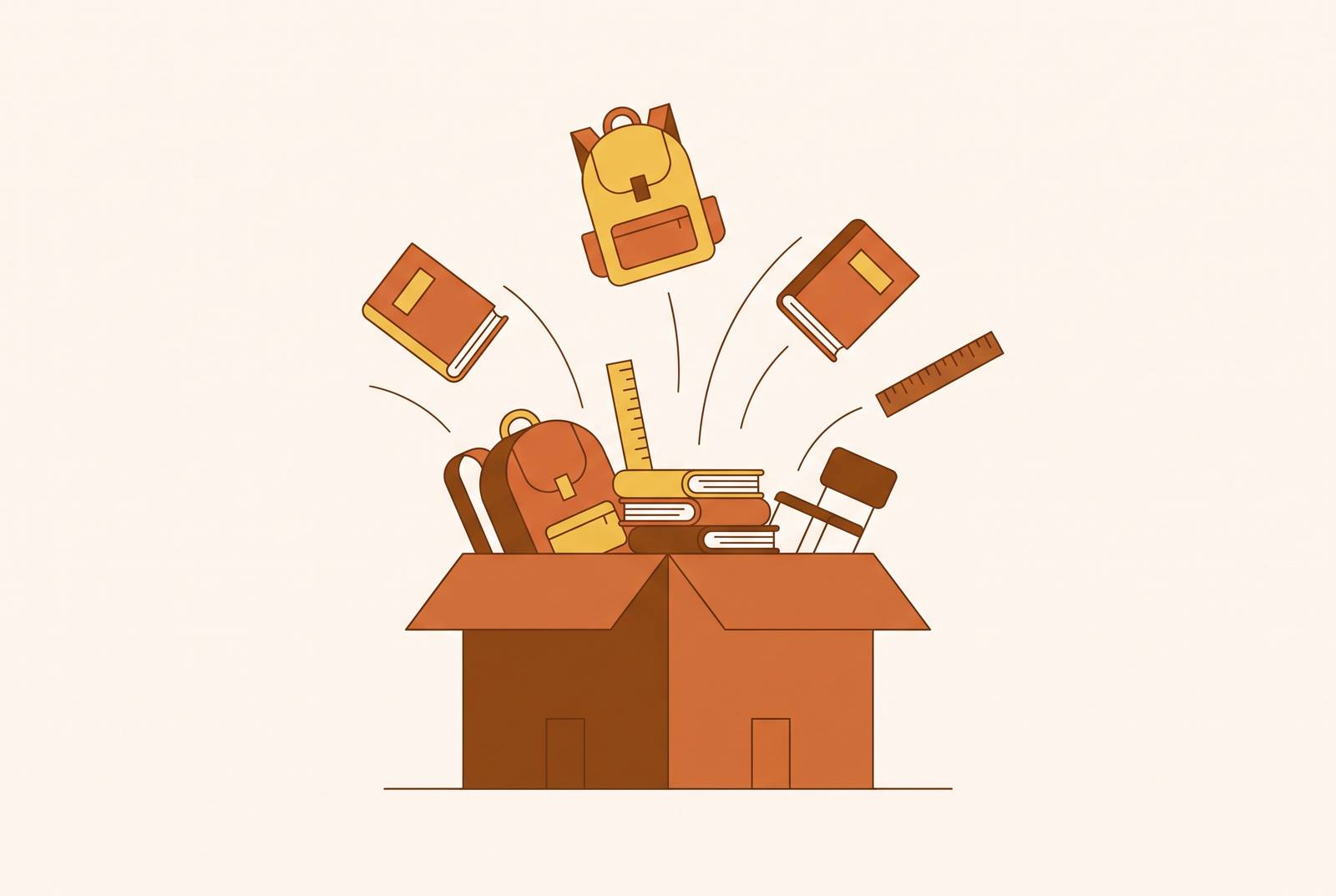
The last day of school works like a deadline for a giant garage sale nobody planned. Every family is sitting on clothes, toys, laptops, and furniture that just hit peak resale value, and buyers are already circling because back-to-school shopping starts within weeks of the last bell. Essentials are running 15 to 24% more expensive in 2025 thanks to tariffs, so secondhand stops being a fallback. It becomes the plan, with resale climbing toward 8% of all retail sales and a projected $306.5 billion market by 2030.
The four item categories that reliably accumulate during a school year and what makes each one sellable
Four categories appear in household spending every single year, whether the household planned for it or not.
Kids' and family clothing tops the list, and the reason is simple: children outgrow clothes faster than clothes wear out. A onesie might get worn for three weeks total. A school year's worth of shirts and pants looks almost untouched by June, just smaller than the kid who wore them. According to Morning Consult, nearly 59% of U.S. parents say they rely on secondhand products for family needs, so the buyer pool isn't hypothetical. On eBay, apparel and accessories make up 13.8% of all listings, putting it among the platform's largest categories.
Toys and gear follow the same pattern on a faster clock. A kid ages out of a toy the way they age out of a shoe size, except nobody notices until the closet won't close. LEGO sets, Nintendo Switch games, and recognizable branded toys all hold value when the set is complete and the branding is recognizable. Missing pieces kill the price. Complete sets keep it, full stop.
Electronics and school tech pile up quietly: laptops, tablets, calculators, old consoles, chargers nobody can identify anymore. Electronics accounts for 16.4% of all items on eBay, making it one of the platform's largest categories, and even older gaming consoles pull steady local interest. Sellers underrate that electronics loses value faster than anything else on this list, so sitting on a laptop for eight months while deciding whether to sell it means losing a meaningful slice of its value before it ever gets listed.
Furniture and room gear round it out. Desks, bookshelves, and bed frames all cycle out at grade transitions, moving up to middle school, high school, or off to a dorm. The secondhand furniture market is expected to hit $24.19 billion in 2025, growing at a 6.57% compound annual rate. The exact thing that makes furniture a pain to donate, the weight, the awkward shape, nobody wanting to haul it, is what makes it easy to sell locally. Buyers already expect to show up with a truck. That's their problem now, not yours.
How to price each category using what items sold for, not what you paid or what's currently listed
Pricing mistakes almost always come from anchoring to the wrong number. Sellers price based on what they paid two years ago, or worse, based on what some other listing happens to be asking right now, as if hope were a pricing strategy. Neither number tells you what a real buyer will actually hand over, and this is where most first-time sellers lose money without ever realizing it.
The number that matters is what identical items actually sold for. On eBay, filter search results by "Sold" listings, pull the last 10 to 15 comparable sales, and take the median. That's your anchor: the median of what identical items actually sold for, unlike the list price of the five other people also failing to sell the same thing. Facebook Marketplace won't show sold prices the way eBay does, so cross-check on eBay first, even if the plan is to list on Marketplace.
Condition does most of the heavy lifting from there. On Marketplace, most used items sell for 20 to 60% of retail, and condition is the single biggest swing factor: "Like New" can fetch three times what "Poor" gets for the same item. Toys in good shape start around 44% of original retail, with the middle of the market landing between roughly 34% and 52%. Premium developmental brands like Lovevery or KiwiCo hold up better, at 50 to 59% of retail, while brands like VTech or BabyBjörn tend to run 37 to 40%. Lightly used electronics broadly sell at 40 to 60% off retail. Furniture sits lower still, at 50 to 80% below new retail, and sellers who price inside that range clear their listings while the ones who price above it just watch the item sit there gathering dust. Certified pre-owned luxury or collectible items generally run below retail, though pricing varies widely depending on condition, brand, and buyer demand.
Choosing the right platform for each item type before writing a single listing
Platform choice comes down to two practical questions: can this item ship, and who's actually buying it? Not habit, not whichever app happens to already be open on your phone.
Facebook Marketplace charges zero seller fee on local pickup, the only fee-free lane available in 2026 (shipped "Buy Now" sales run 5%, with a $0.40 minimum). That makes it the obvious home for furniture, fitness equipment, big TVs, appliances, anything where shipping would eat the entire profit before it existed. Pricing here needs to reflect the actual zip code, not some national average. A desk in a college town moves differently than the same desk in a suburb outside a major metro, and offering paid delivery on bulky items can close sales that a stubborn "pickup only" listing never would.
eBay charges a 13.6% final value fee plus a per-order fee in most categories, verified August 2026, putting it mid-pack on cost. What it offers instead is the largest buyer pool for general goods, built-in buyer protection, and the only public sold-listing database in this comparison, which makes pricing far less of a guessing game. Electronics and apparel are the two biggest categories on the site (16.4% and 13.8% respectively), so both come with deep comp data ready to search.
Poshmark takes 20% commission on sales of $15 or more, and a flat $2.95 on anything under that, which represents a steep cut on lower-priced items. Skip Poshmark for the low-dollar stuff; it's not built for it. Buyers cover their own shipping costs, so sellers don't absorb that expense. Where Poshmark earns its keep is women's clothing, shoes, activewear, handbags, and accessories, sold to an audience willing to pay more for fashion than the typical Marketplace browser. Pricing fashion items 10 to 20% above eBay comps on Poshmark tends to reflect that higher willingness to pay.
Writing listings that sell: photos, titles, and descriptions for items in each category
Most end-of-year items never get listed at all, and it's rarely because the seller didn't want the cash. It's friction. Fewer steps means the listing actually gets posted instead of living in a mental someday-pile until the yard sale that never happens.
Photos do double duty: the marketplace algorithm reads them visually, but buyers find listings through text search, so both channels need to work. Natural light from an open window against a plain background alone separates a listing that looks like "used junk" from one that reads as a "vintage find." Show any wear or damage honestly, especially with electronics, since a clear photo of a scratch heads off disputes and bad reviews before they happen. Clothing photographs best flat or on a hanger, tags visible if they're still attached. Furniture should be shot in an open space, not wedged between boxes, because buyers are picturing it in their own living room, not yours.
Titles need to contain the exact words a buyer would type into a search bar: brand, model, size, color, and condition, all in the title itself. "Mid-Century Modern Accent Chair, Teal Velvet, Similar to Joybird/West Elm" outsells a listing titled "Chair" nine times out of ten, mostly because search engines can't read minds. For electronics, the model number and generation matter: "Apple MacBook Air M2 13-inch 2023, 8GB, Space Gray" pulls in buyers who already know what they want. For toys, name the set and confirm it's complete: "LEGO City Police Station 60316, Complete, All Minifigs" moves faster and for more money than "LEGO set" ever will. Naming a comparable brand, even when the item isn't that brand, brings in shoppers already searching for it.
Descriptions should answer the questions before a buyer has to ask them by message. State the condition, then explain it in one line: "Good condition, minor scuff on the left leg, fully functional, non-smoking home." Include measurements for furniture, sizes for clothing, and compatibility notes for any electronics accessory. For local pickup, spell out logistics up front: "Available weekends, [neighborhood], cash or [payment method]." Fewer back-and-forth messages means fewer buyers who lose interest and wander off to the next listing.
Staying safe when strangers come to buy: avoiding the common scams that hit post-school-year sellers
Selling to strangers means meeting strangers, and the safety rules here are simple. They're just easy to skip when you're trying to get a couch out of the garage before dinner.
For small items, meet in public: a coffee shop parking lot, a busy retail lot, or a police station's designated exchange zone if the local department offers one. For big furniture or appliances where the buyer has to come to the house, have someone else around, confirm the buyer's profile before handing over an address, and keep the appointment during daylight hours. It's a couch, not a covert operation, but a little caution costs nothing.
Pre-qualifying buyers before locking in a time saves a surprising amount of grief, too. A quick confirmation message the day before cuts down on no-shows, and no-shows are one of the most avoidable headaches in the entire resale process. A five-second "still coming tomorrow at 2?" text does more work than most sellers give it credit for.