Tracking Resale Income as a Household Budget Line
Treating occasional sales like steady income transforms spare cash into a reliable budget tool.
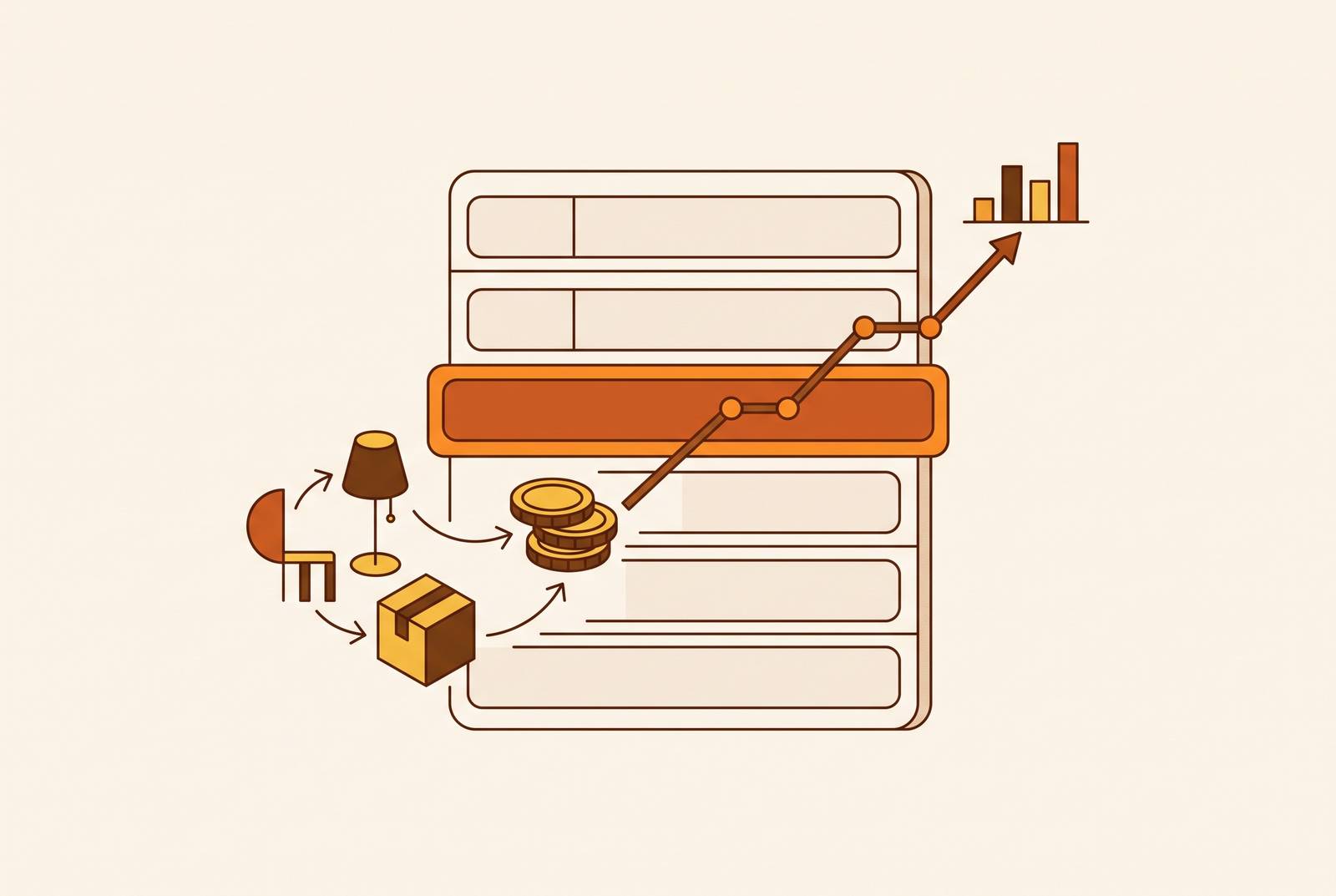
Resale income stops being a happy accident the day someone writes it down. That's the whole argument here: track it like a paycheck, project it like a paycheck, and it starts acting like one. Most people don't do this. Money from a sold couch or an old phone lands in checking, gets absorbed into groceries or gas, and vanishes without ever touching a debt payment or a savings goal on purpose.
The timing on this matters more than it used to. The U.S. The U.S. secondhand market is now roughly $61 billion, up 8.2% from the year before, and 93% of Americans bought something secondhand in the past year. Buying used stopped being a niche behavior a while back. It's mainstream now, which means the selling side of that transaction is mainstream too. And the appetite for it isn't just steady, it's countercyclical: 69% of Americans say they're more likely to buy or sell secondhand specifically when the economy feels shaky. That's worth sitting with for a second. Resale activity doesn't fade when budgets tighten, it picks up, which means the income it produces is doing its most important work exactly when households need it most.
There's a headline number floating around that makes this all sound less urgent than it is. Real median household income hit $87,460 in 2025, the strongest figure on record. Sounds great, until you notice the gains are lopsided, concentrated in the upper half of earners, which means a lot of households are reading that headline and thinking "must be nice". For them, a resale line isn't decoration on an already-healthy budget. It's one of the more reliable levers available.
Household budget income categories and where resale fits
Every functional household budget runs on the same basic skeleton: income sources, fixed expenses, variable expenses, and savings or goals multicalculators.com. Templates like Tiller's 50/30/20 sheet, Smartsheet's Simple Budget, and Google Sheets' Monthly Budget all build from that same frame multicalculators.com. The 50/30/20 split allocates half of income to essentials, 30% to wants, and 20% to goals multicalculators.com shopify.com. Resale proceeds slotted into that last bucket accelerate debt payoff or savings without ever touching the paycheck that covers rent multicalculators.com shopify.com.
Salary is fixed. Resale income is not, and it shouldn't be treated as if it were.
Resale needs its own line, separate from salary and definitely separate from a catch-all "miscellaneous" category. Miscellaneous is where money goes to disappear. A dedicated resale line does something a vague category can't: it makes the pattern visible. Is it growing? Shrinking? Did it fund the emergency fund this month or the vacation fund? None of that is answerable if the $80 from a sold bike frame gets folded into "other How to Price Items on Facebook Marketplace: Complete 2026 Guide underpriced.app extraspace.com underpriced.app uprightlabs.com."
Plenty of tools already handle this without any extra setup. Monarch has been rated for ease of use, Quicken Simplifi builds a real-time spending plan for planners, Empower is free and doubles as a net-worth tracker for the investing-minded, YNAB suits people who want granular control, and Goodbudget is built for beginners easing into the habit. Not interested in an app? A spreadsheet works just as well, whether that's Tiller's Monthly Budget Calendar or a plain notes-app table. The tool is not the point. The habit of writing down every sale is.
Building a realistic monthly resale income projection
Projecting resale income is awkward because nobody knows in advance what will sell, when it'll sell, or what it'll go for. So most people project nothing, and then act surprised either way when the number lands high or low.
There's a workaround, and it's not complicated. Pull the last three months of actual resale proceeds, average them, then budget with 70 to 80% of that average extraspace.com. That gap between the real average and the number in the budget is deliberate. It absorbs a slow month without making the whole category feel like a waste of a spreadsheet row extraspace.com. No history yet? Do a one-time inventory audit: walk the house, list what's realistically headed for resale, then price those items using sold-data research (more on that next) before anything gets listed.
Resale income also isn't flat across the calendar, and budgeting like it is sets up a mismatch every few months. Think in terms of two different modes instead of one flat average: "active declutter" months, when a move or a big clean-out spikes the numbers, and "maintenance" months, when only the occasional item goes up for sale. Dividing one annual figure by twelve and calling it done ignores both of those realities.
Decide where the money is going before it shows up. Emergency fund, credit card payoff, holiday spending, whatever fits. Assigning the job in advance keeps resale cash from quietly dissolving into weekday spending before anyone's tracked a dime of it.
Why pricing accuracy determines whether your projections hold
A projection is only as good as the price estimates feeding it, and this is where most sellers go wrong without realizing it. Active listings show asking prices, not sold prices. Plenty of those listings never sell at the number the seller wanted, so using them as a comp inflates every projection built on top of them.
A decent default, absent better data: most used household items sell for 30 to 60% of what they originally cost multicalculators.com. It's a real starting range for anything without a direct comp, even if not glamorous multicalculators.com. For a sharper number, eBay's "Sold Items" filter is hard to beat. It shows the final prices matching listings actually closed at, which is about as close to ground truth as a casual seller gets, though Best Offer prices sometimes stay hidden and results need filtering by condition and variant rather than taken at face value.
The workflow itself takes about five minutes: search the exact item and model, filter to Sold only, note the range, throw out the obvious outliers that never should've sold at that price, then price at or just under the median. That's usually enough to move an item in a reasonable window instead of watching it sit for a month.
A few adjustments sharpen the number further. Original packaging, chargers, remotes, and manuals can tack on 10 to 20% to what an item actually sells for, so factor in what's really in the box, not what should be multicalculators.com shopify.com. And if something sits unsold for a week, the standard move is to drop the price 15 to 25% below fair market value How to Price Items on Facebook Marketplace: Complete 2026 Guide voolist.com. Build that into projections too. Some items in any batch are going to sell at the low end of their range, and pretending otherwise just sets up next month's disappointment.
Choosing the right platform so your projected income materializes
Platform choice isn't a matter of taste. It's a budget decision, because fees come straight out of net proceeds, and net proceeds are the only number that belongs in a budget line.
Facebook Marketplace charges nothing on local pickup sales and reaches over a billion monthly users, which makes it the natural home for furniture, appliances, and anything too bulky to ship blog.adnabu.com underpriced.app. Run the same $75 item through eBay instead and fees knock it down to roughly $64, versus the full $75 on a local Marketplace sale blog.adnabu.com underpriced.app. Shipped sales on Marketplace do carry a fee (5% of the sale price, minimum $0.40), and the prepaid label situation has been in flux voolist.com zikanalytics.com. Facebook removed prepaid shipping labels for new listings as of February 24, 2025, requiring sellers to provide their own label, then quietly reinstated them for select sellers around August–September 2025, so it's worth checking a current listing's terms and building label cost into the price either way voolist.com zikanalytics.com.
eBay runs on a final value fee near 13.6% plus a $0.40 per-order charge, though 250 listings a month are free before insertion fees kick in, putting the effective take-rate around 14% in standard categories zikanalytics.com underpriced.app. That's a real cost, but eBay earns it back on anything with national demand, especially where shipping doesn't eat the margin. Local pickup through Marketplace solves that problem entirely for anything bulky How to Price Items on Facebook Marketplace: Complete 2026 Guide underpriced.app extraspace.com underpriced.app uprightlabs.com.
eBay listings now surface inside Facebook Marketplace at no extra cost, with the transaction still running through eBay, so standard eBay seller protections apply (though feedback removal is limited to specific policy scenarios, not a blanket guarantee).
Matching category to platform is the fastest way to raise the net number. Furniture and anything for local pickup belongs on Marketplace. Electronics, collectibles, and vintage pieces with national appeal do better on eBay, where a buyer pool near 135 million tends to push bids up when shipping costs stay reasonable. Clothing, home decor, and beauty items fit Poshmark, which runs around 80 million users and over 200 million active listings extraspace.com. Vintage clothing, Y2K pieces, and streetwear find their crowd on Depop, largely Gen Z buyers. Trading cards, Funko Pops, vinyl, sneakers, and a long list of other collectibles move well through Whatnot's live-sale format, which covers over 250 categories. OfferUp is a solid alternative to Marketplace for local sales, particularly on higher-value items where buyer intent and safety features carry more weight. And tech devices, plus media like CDs, DVDs, Blu-rays, and games, fit Decluttr's lane.
Cross-listing across a couple of platforms can lift what any single item earns, but it comes with one hard rule: pull it everywhere else the moment it sells. A basic spreadsheet tracking where each item is posted keeps that from turning into an accidental double sale.
Whatever platform gets used, run the fee math before the number goes into the budget, not after. A $100 item on eBay nets around $86 once fees are subtracted, and $86 is the figure that belongs in the resale line, not the $100 sticker price multicalculators.com.
Tracking each sale so the budget line stays accurate over time
Every sale needs the same handful of details logged at the time it happens, and those details are what sold, which platform, the gross price, fees paid, shipping cost if it applies, net proceeds, and the date. Those details are all that's required. Not complicated, just consistent.
Net proceeds are the only number that belongs in the budget. Log the gross price instead and the income line looks bigger than the cash that actually landed, which quietly wrecks next month's projection. Where this gets tracked matters less than whether it happens at all: a tab inside Tiller, Smartsheet, or Google Sheets works, a notes-app table works, even a paper ledger works.
Set a monthly reconciliation habit, totaling the net proceeds, holding it against the projection made at the start of the month, and noting that it held, fell short, or beat expectations. That comparison is what makes next month's number sharper than a guess. Tagging each sale by category (electronics, clothing, furniture) adds another layer of insight over time, since it is visible which categories actually pay off relative to the time they take to list, price, and ship.
Resale income is generally taxable, and the rule that lets personal items sold at a loss go untaxed doesn't erase reporting requirements for anything sold above what it originally cost. This isn't a tax guide and shouldn't try to be one, but keeping records now saves a scramble later. For anyone using an app like Monarch or Quicken Simplifi, this part gets easier. Both auto-categorize bank deposits, so a resale payout hitting a linked account just needs a consistent tag to keep the whole line current without manual entry.
The effect of consistent tracking on financial stability over months, not days
None of this pays off in a week. The payoff appears over months, in the slow compounding of small amounts that get logged, assigned to a goal, and kept out of casual spending. A little bit of resale money directed at a debt payment or an emergency fund, done consistently, changes a household's financial position over a year in a way a single lucky sale never will.
There's also a behavioral loop worth naming. Once resale income has a visible line in the budget, people list more often, because they can actually see the results of doing it. The category grows because listing turns into routine instead of something that only happens during a spring cleanout.
The U.S. online resale market is projected to hit $40 billion by 2029 zikanalytics.com. Tracking is what makes that personal ceiling visible, so nobody's budgeting against a number that was never theirs to hit in the first place zikanalytics.com.
Resale income also isn't a replacement for a steady paycheck, and treating it that way is a mistake. It's variable, it draws down a finite pile of stuff, and it takes ongoing effort to keep sourcing new items. The honest framing is supplemental: real, useful, worth a line in the budget, but not the foundation.
What actually stops most people isn't the selling. It's the friction before and after: figuring out what to list, then losing the thread on tracking it once it's sold. Solve both and resale income turns into something durable instead of a one-off cleanout that funded one good weekend. The setup itself takes less time than reading this sentence twice: pick a budget tool, add a resale line, run a sold-price check on the first item heading out the door, and log the net proceeds the moment it sells. From there, the system runs itself.